Duration: May 1, 2025 – April 30, 2029
Project
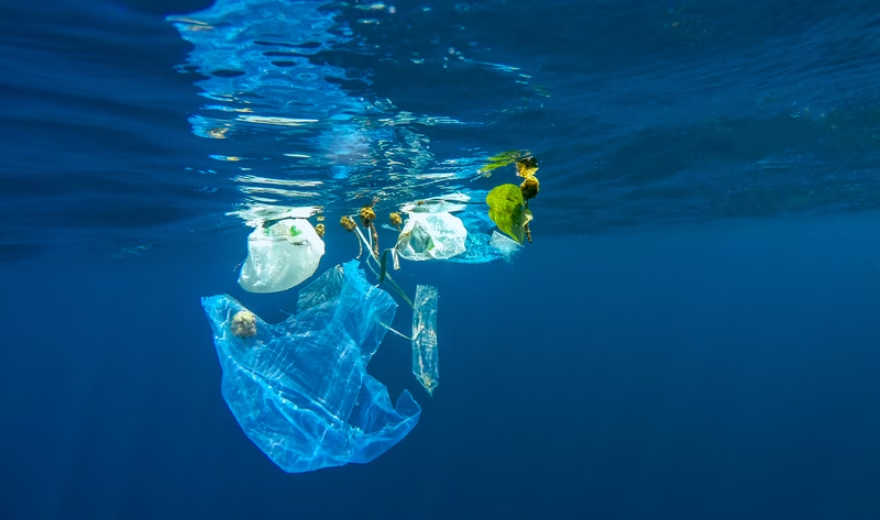
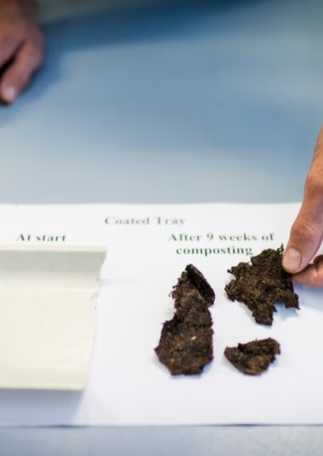
As part of the Be-UP project, new synthesis and processing routes will be developed for novel aliphatic-aromatic biopolyesters with a higher proportion of renewable raw materials, utilizing biobased building blocks (e.g., 1,4 bio-BDO), in combination with innovative catalysts and additives. These components will be optimized using advanced digital modeling tools, based on kinetic Monte Carlo (kMC) models, for synthesis and polymerization. These biopolyesters will be blended with commercial biopolymers (e.g., PLA, PBAT, and PHA), biobased chain extenders, and mineral fillers to create bioplastic packaging materials. In the design of these blends, advanced compounding modeling tools will be utilized, supported by techniques such as screw design and inline rheology measurements, to achieve the intended technical performance, sustainability, and biodegradability through an evaluation based on a multi-objective function. Processability will also be a key factor, with an emphasis on the primary production techniques used in the packaging industry, namely blown film extrusion, injection molding, and thermoforming. A series of packaging product prototypes (TRL7) will be manufactured to validate the developed materials. The biodegradability of these new products will be assessed in various “end-of-life” (EoL) scenarios, including open environments and controlled conditions, thereby bridging the gap between laboratory conditions and the actual behavior of these materials at the end of their life. In addition, the recyclability of the new products will be evaluated. The data and conclusions from these assessments will be useful for: i) developing guidelines and tools for circular design that contribute to the implementation of the “Safe and Sustainable by Design” (SSbD) framework; ii) improving the standardization framework for testing and labeling materials and packaging products. Be-UP is expected to replace more than 50,000 metric tons of non-biodegradable plastics by 2032, resulting in savings of more than 120,000 metric tons of CO₂ equivalent per year.
Coordinator
INSTITUTO TECNOLOGICO DEL EMBALAJE, TRANSPORTE Y LOGISTICA (Spain)
Partners
INSTITUTO TECNOLOGICO DEL EMBALAJE, TRANSPORTE Y LOGISTICA (Spain), HYBRID CATALYSIS BV (Netherlands), PARTICULA GROUP DRUSTVO S OGRANICENOM ODGOVORNOSCU ZA ISTRAZIVANJE RAZVOJ I PROIZVODNJU (Croatia), ISOTECH LTD (Cyprus), EUROPEAN BIOPLASTICS EV (Germany), Polinivo (Belgium), IDENER RESEARCH & DEVELOPMENT AGRUPACION DE INTERES ECONOMICO (Spain), NORMEC OWS (Belgium), CEBIMAT LAB SL (Spain), INNOTECH COEXPAN-EMSUR SL (Spain), NOVAMONT SPA (Italy), POLYMERIS (France), IMERYS TALC EUROPE (France), FAKULTETA ZA TEHNOLOGIJO POLIMEROV (Slovenia), ASOCIACION ESPANOLA DE NORMALIZACION (Spain), Aptar France SAS (France), UNIVERSITA DEGLI STUDI DI TRIESTE (Italy)
Responsibilities of Normec OWS
- Work Package 3 Leader: Biodegradability Testing
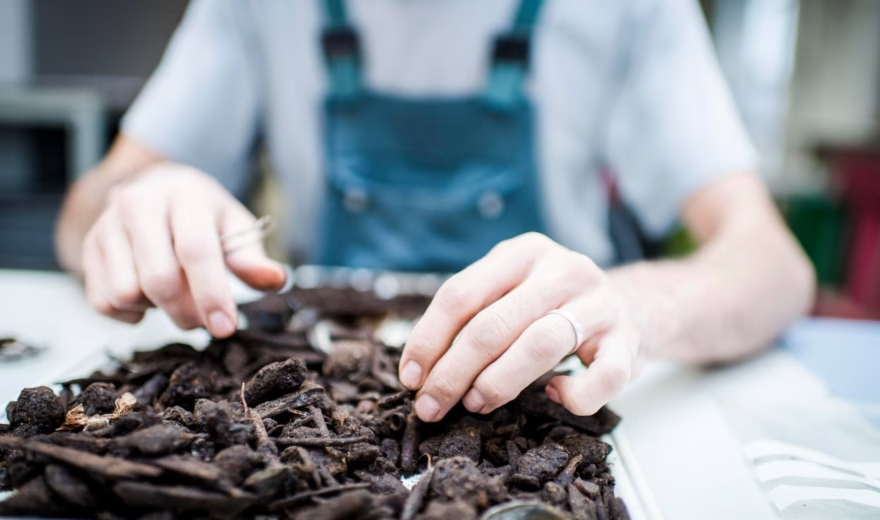
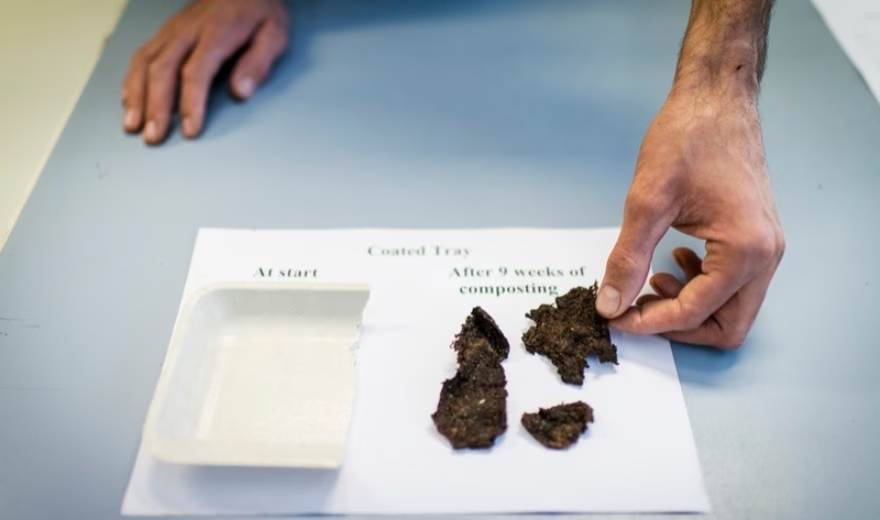
- Evaluation of the biodegradability of laboratory products, biopolyesters, and bioplastic packaging materials in various environments (compost, freshwater, soil, marine environment)
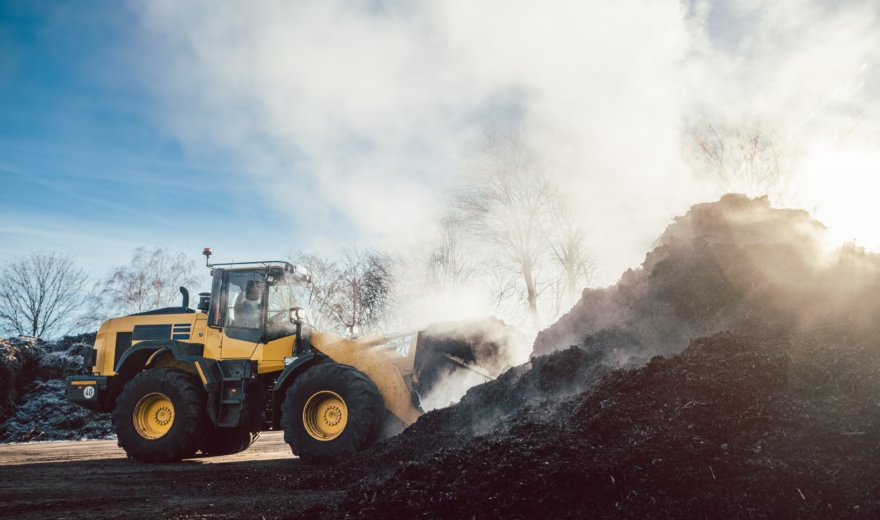
- Assessment of the final packaging prototypes for suitability for organic recycling via industrial composting (including biodegradability, evaluation of material properties (primarily heavy metals), disintegration, and effect on plant toxicity) and anaerobic digestion
- Conducting disintegration tests in open environments (marine and soil)


The project is supported by the Circular Bio-based Europe Joint Undertaking and its members. Funded by the European Union. However, the views and opinions expressed are solely those of the author(s) and do not necessarily reflect those of the European Union or the CBE JU. Neither the European Union nor the CBE JU can be held responsible for this.
Ready for the next step?
Discover how Normec Certification helps your organization demonstrate compliance with standards and regulations and be prepared for tomorrow’s challenges.