Why marine degradation is critical for environmental and regulatory issues
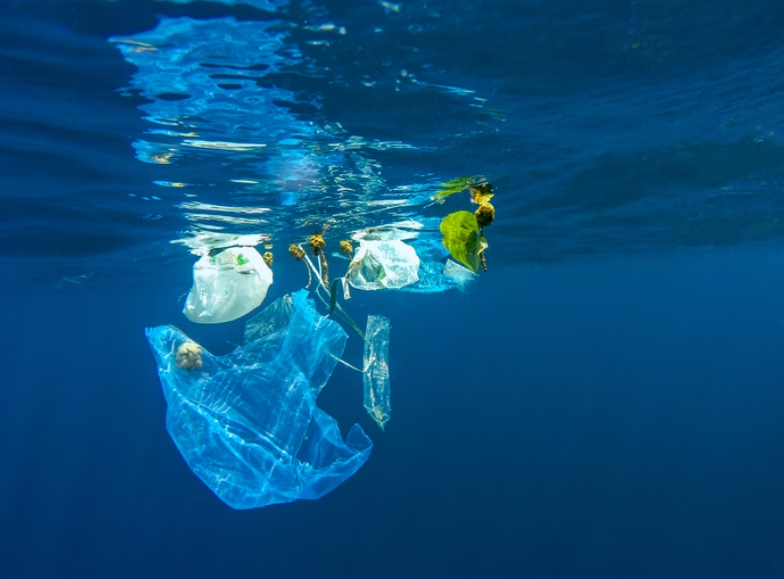
Plastic used in marine applications, such as fishing nets, lines and bait, often ends up in the sea. The biodegradability of these materials is essential to reduce damage to ecosystems.
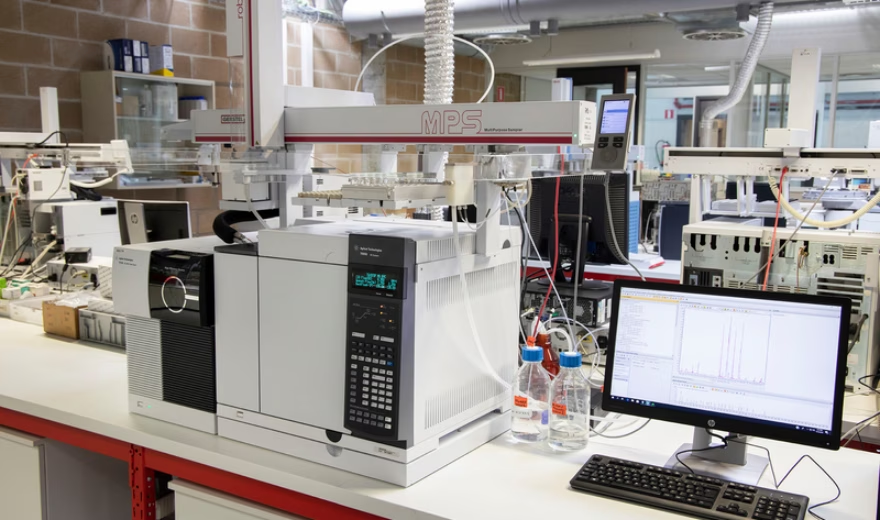
Marine degradation testing gives you insight into how materials behave in seawater. This helps you make environmentally friendly choices and comply with laws and regulations. At Normec, we offer comprehensive testing capabilities for degradation, toxicity and chemical composition, in full compliance with applicable standards.
How we test marine degradation
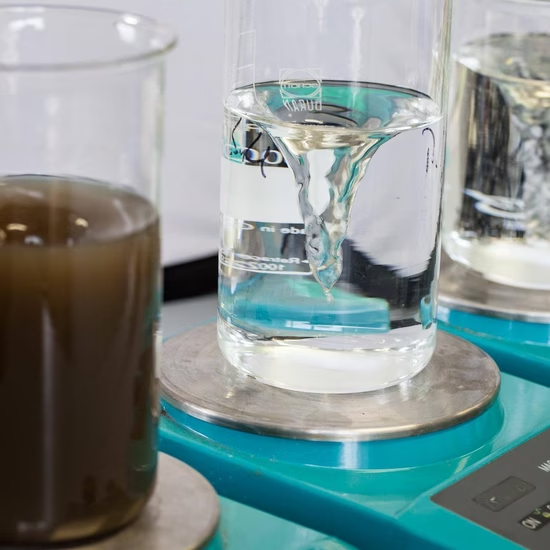
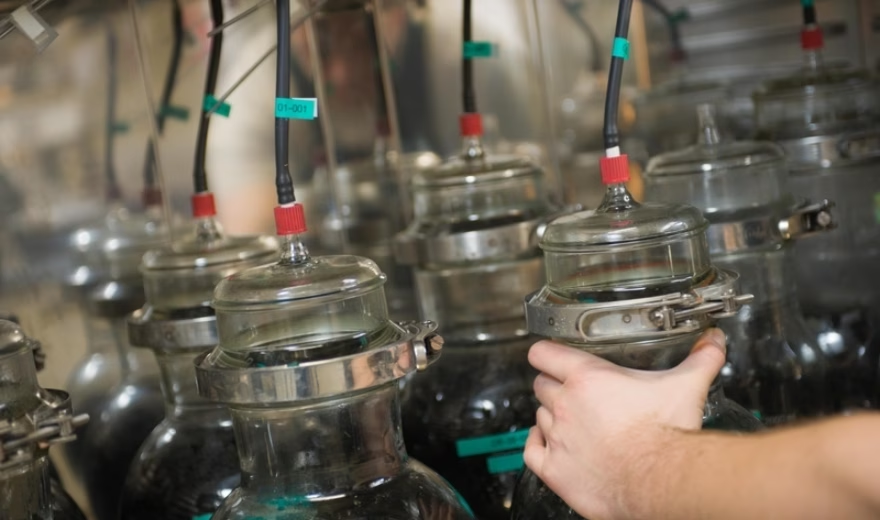
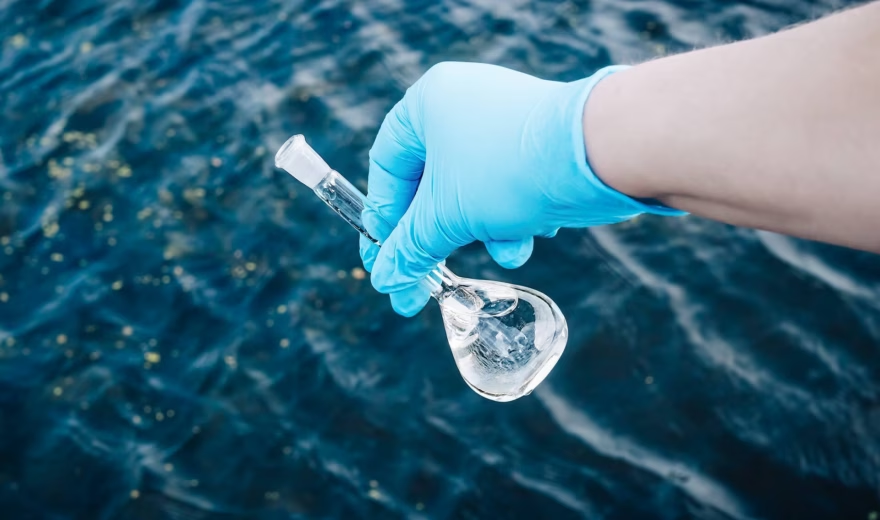
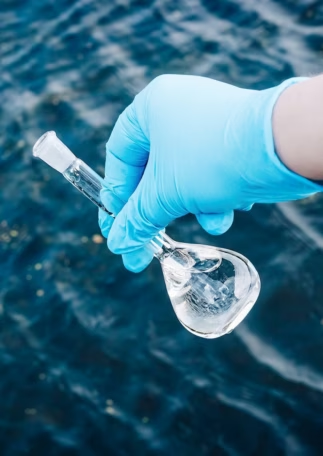
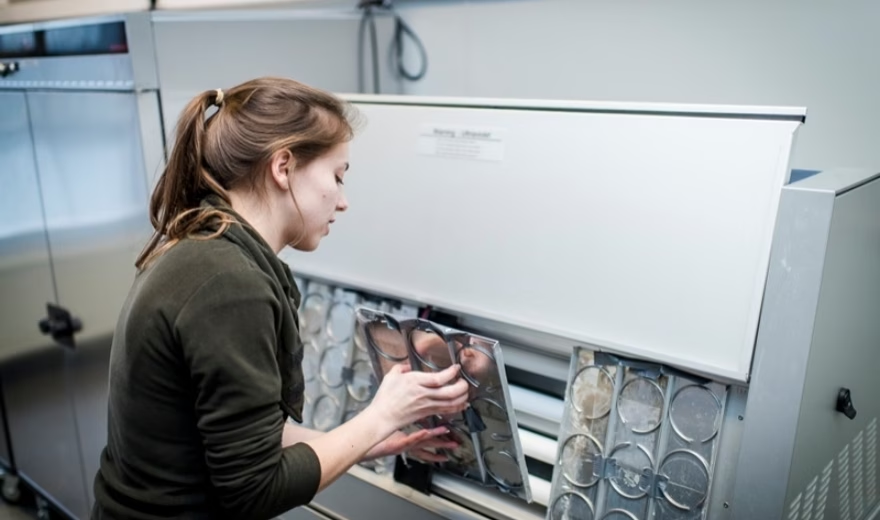
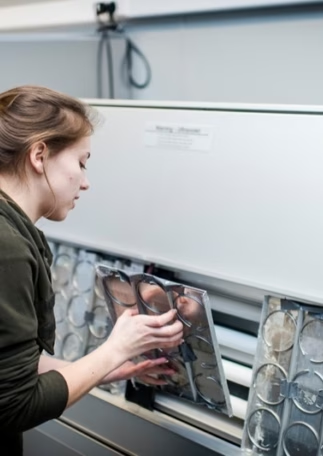
We conduct our tests under conditions that are as close as possible to reality. For this, we use water and sediment from the North Sea, combined with appropriate minerals according to standards.
Our tests support:
- Certification
- Product development (R&D)
- Marketing and legal claims
In addition to standard tests, we also offer additional analyses for different marine zones:
- Pelagic zone (open water)
- Eulittoral zone (water-sediment transition)
- Benthic zone (sea floor)
This gives you a complete and realistic picture of the behavior of your material.
Our expertise in marine testing
Normec is an independent and globally recognized laboratory with in-depth expertise in marine degradation.
We work to international standards, including:
- ASTM D6691 and ISO 23977 (biodegradation in seawater)
- ISO 19679 (sediment-seawater interface)
- ISO 22404 (sediment)
- ISO 23832 (disintegration)
- OPPTS 850.1010 (toxicity - Daphnia Magna)
In addition, we support certification such as the OK biodegradable MARINE certificate from TÜV AUSTRIA. We continue to innovate and develop new test methods, for example with marine algae and other marine organisms.
What does this mean specifically for you?
- You gain insight into the degradability of your material in seawater
- You meet certification requirements such as OK biodegradable MARINE
- You substantiate claims with reliable and recognized test results
- You detect potential harmful effects on marine ecosystems
- You develop more sustainable products with less environmental risk
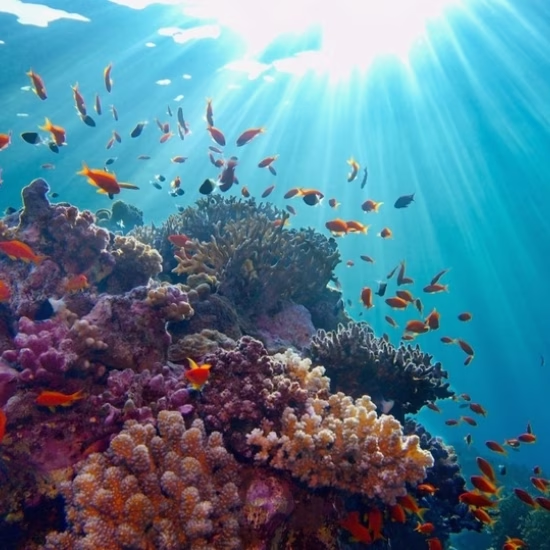
Protection of marine ecosystems
The impact of materials on the sea is becoming increasingly important. By understanding degradation and toxicity, you actively contribute to protecting marine ecosystems. We help you with reliable data and practical insights so that you can make sustainable and responsible choices.
Want to know more about marine degradation?
You might also be interested in these services
Frequently Asked Questions about marine degradation
-
Biodegradation can occur either aerobically or anaerobically. In aerobic biodegradation, microorganisms convert organic carbon into CO₂ and water. Anaerobic biodegradation produces CH₄ (methane) and CO₂.
-
Compostability is the breakdown of a material into organic matter by microorganisms such as bacteria and fungi. This includes biodegradation, disintegration and control of environmental safety such as ecotoxicity.
-
Disintegration is the physical disintegration of a material into smaller pieces. This does not automatically mean complete biodegradation, as the material can also disintegrate into micro-particles.
-
The most important certification is OK biodegradable MARINE from TÜV AUSTRIA. This requires biodegradation, disintegration and toxicity tests.
-
Among other things, we test biodegradation, disintegration, toxicity and the presence of heavy metals and fluorine.
-
To simulate realistic conditions. That way you get test results that better reflect real-world conditions.