Industrial composting according to international standards
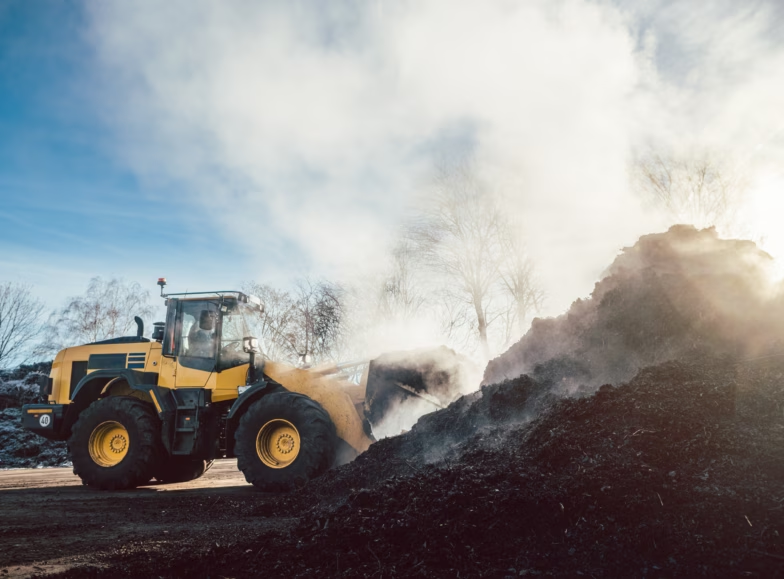
Industrial composting plants process large quantities of organic waste. These biowaste streams often include plastic products, such as garbage bags, coffee capsules or packaging materials. These materials must break down quickly without leaving behind harmful residues. Only then will the compost remain of high quality and safe for use in agriculture and horticulture.
Normec conducts degradation and environmental safety tests for a wide range of materials and products under industrial composting conditions. Our tests meet international standards and can be used for certification, legal or marketing claims, and for research and product development.
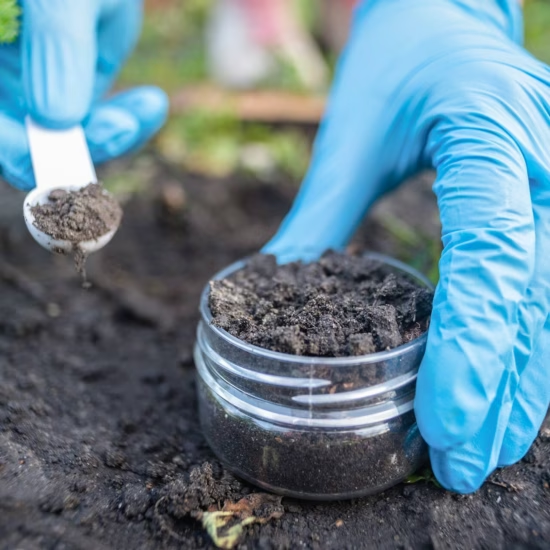
Our approach
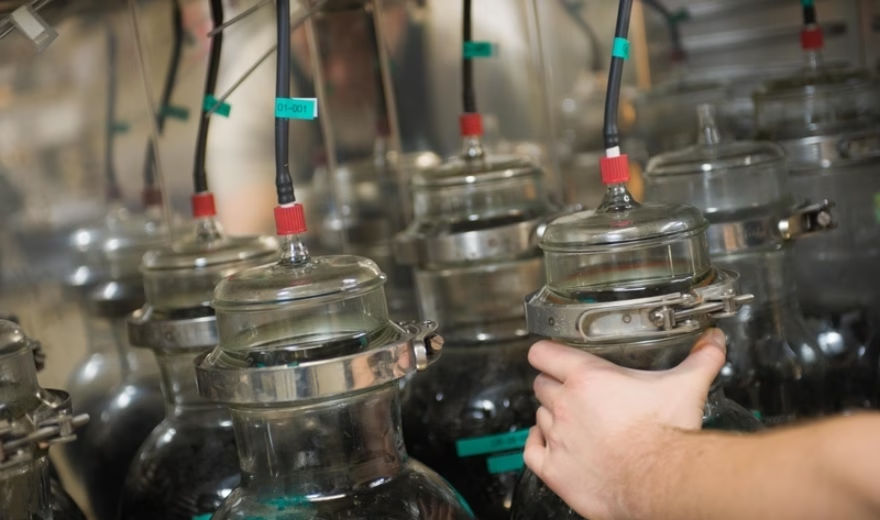
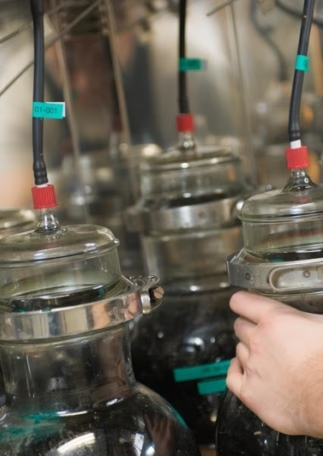
The requirements for industrial compostability are defined in international standards. We perform testing for all major components of compostability: biodegradation, disintegration, ecotoxicity, and chemical analyses such as heavy metals and fluorine. Biodegradation measures the conversion of organic carbon to CO₂ by microorganisms. For certification, at least 90% of the carbon must be converted to CO₂ at 58 °C within six months.
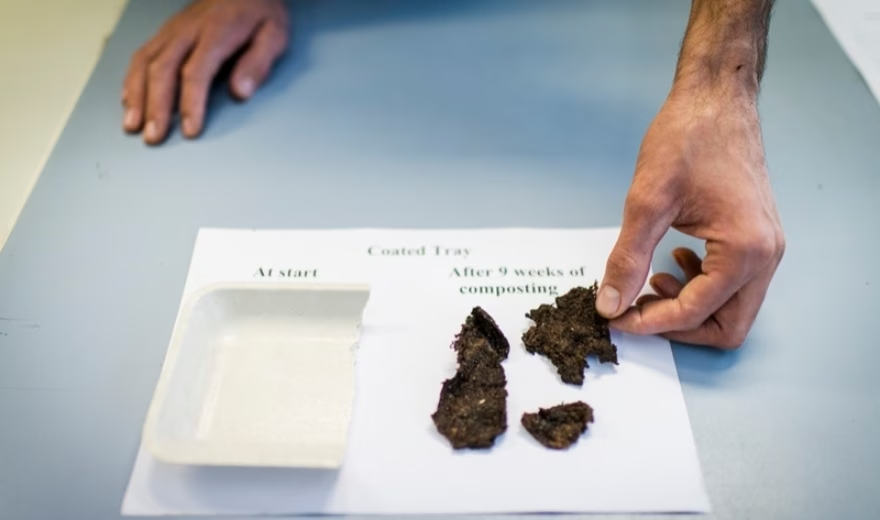
Disintegration tests determine the extent to which a material physically disintegrates and visually disappears in the compost. For certification, 90% of the material must disintegrate within 12 weeks under controlled composting conditions. Ecotoxicity tests examine whether compost residues are harmful to plants or soil organisms. In addition, we analyze heavy metals and fluorine to determine if they are within standards.
Tests can be performed separately, sequentially or in parallel, depending on the purpose of the study or certification process. We assist in conducting the tests, collecting the necessary data and preparing the certification file.
Expertise in compostability and environmental testing
Normec is an independent and globally recognized laboratory for compostability testing and environmental analysis. We test various materials such as packaging, plastics, inks, adhesives, coatings, additives and semi-finished products.
We perform industrial composting testing according to international standards, including:
ISO 17088, ISO 18606, EN 14995, EN 13432, ASTM D6400, ASTM D6868, ASTM D8410 and AS 4736.
Our reports are accepted worldwide by certification bodies such as:
- DIN CERTCO
- TÜV AUSTRIA
- BPI
- ABA
- JBPA
We accompany organizations from test phase to certification and market entry.
What does this mean concretely for you?
- You demonstrate that your product is industrially compostable
- You meet international standards and certification requirements
- You can substantiate compostability claims
- You prevent risks to compost quality and the environment.
- You support product development with reliable test results
Prepared for the future of compostable materials
Demand for compostable materials is growing due to stricter regulations and sustainability goals. Certification and demonstrable compostability are therefore becoming increasingly important for manufacturers, packaging developers and brand owners.
Through timely testing and certification, you ensure that your products meet future legislation and market requirements. This is how you work toward sustainable product development and reliable environmental claims.
Want to know more about industrial composting?
You might also be interested in these services




Frequently Asked Questions about industrial composting
-
Compostability means that a material is broken down into organic matter by microorganisms such as bacteria and fungi. This process consists of biodegradation and disintegration. Biodegradation occurs at the biochemical level, while disintegration means that the material physically disintegrates and visually disappears in the compost.
Compostability goes beyond degradation. The material must also be safe for the environment and not adversely affect compost quality. Therefore, compostability testing consists of four major components: material properties, biodegradation, disintegration and ecotoxicity. Together, these factors determine whether a material is compostable according to applicable standards.
-
Compostability is a broader concept than biodegradation. A product that is compostable is always biodegradable under composting conditions. But a product that is biodegradable is not automatically compostable.
-
When a product biodegrades, the carbon in the material is converted in two ways. Some of it is converted into CO2 or CH4. This is measured during the biodegradation process. Another part is converted into new microbial biomass. This part cannot be measured directly and is therefore considered biomass yield.
A result of 90% biodegradation means that 90% of the carbon has been converted to CO2 or CH4 and the remaining carbon has been incorporated into microbial biomass. In practice, this means that the material has fully biodegraded and no residual material remains.
-
A product is industrially compostable when it meets requirements for biodegradation, disintegration, ecotoxicity and heavy metals according to international standards.
-
Industrial composting is done at higher temperatures and under controlled conditions, so materials degrade faster than in home composting.
-
Biodegradation can take up to six months. Disintegration tests usually take about 12 weeks.
-
Yes, test results can be used for certification according to international standards such as EN 13432, ASTM D6400 and ISO 17088.
-
Among others, packaging, films, coffee capsules, labels, inks, adhesives, coatings and additives.