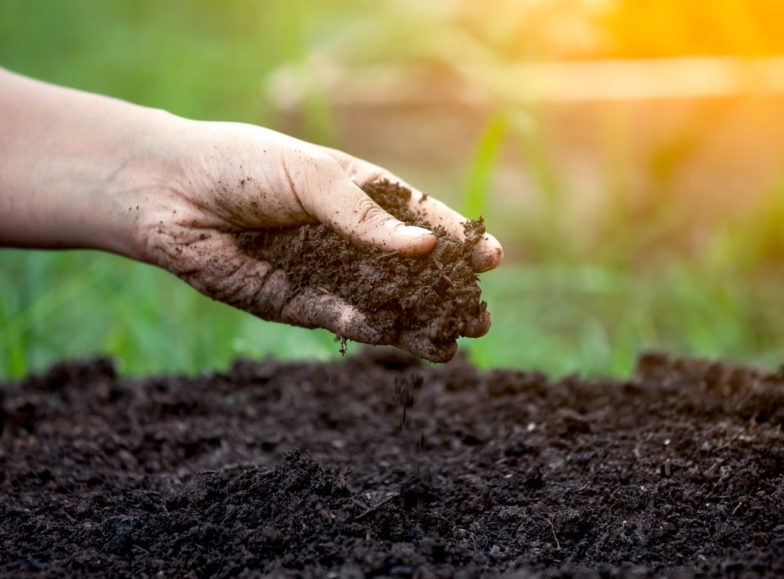

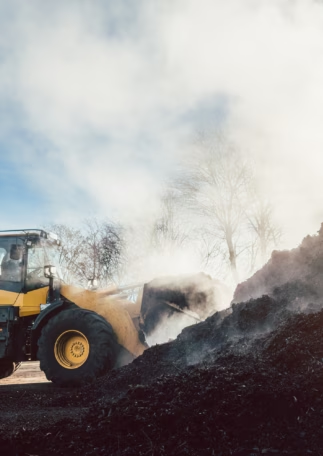
Under controlled conditions
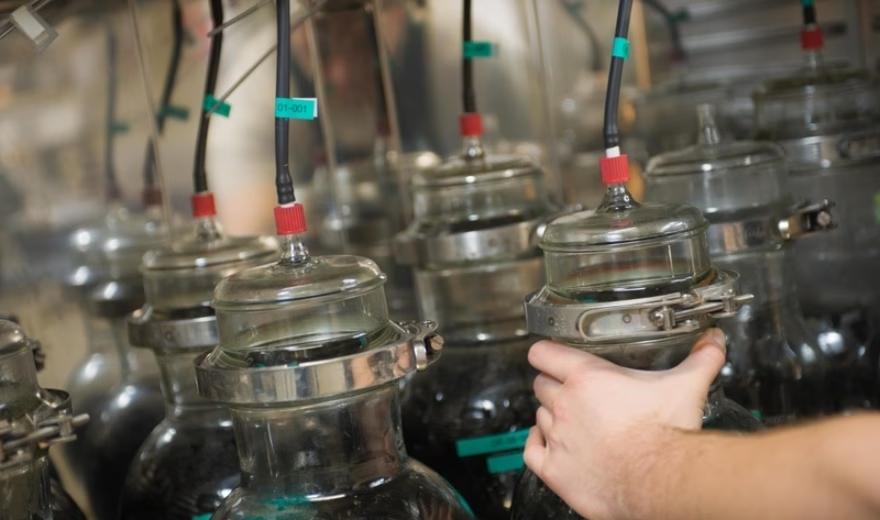
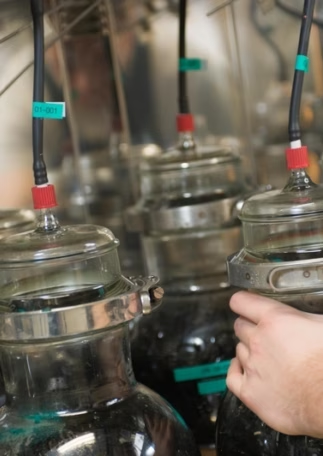
Laboratory testing forms the basis for assessing compostability and biodegradability. Under controlled conditions, it is determined whether a product meets the specified requirements and standards.
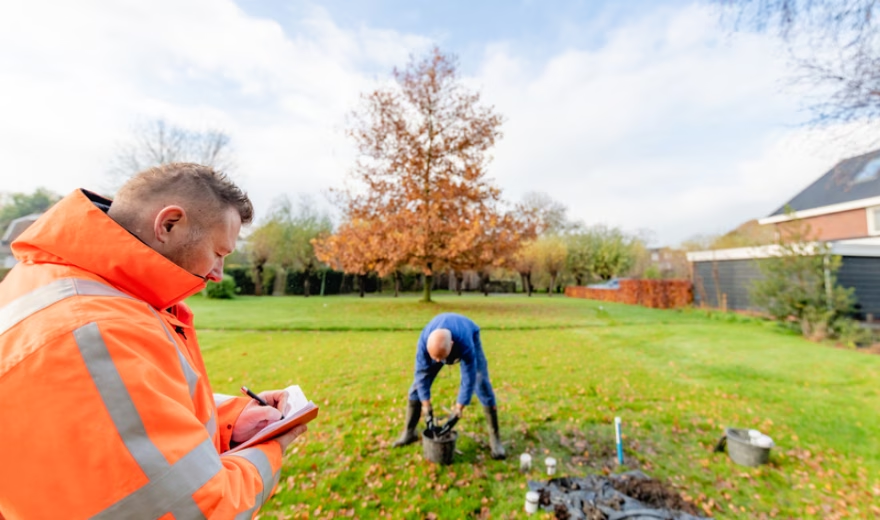
However, in practice, composting does not take place in a laboratory. Temperature, humidity, aeration, and microbial activity vary by location, season, and climate. Therefore, it can be valuable to conduct additional testing to determine how a product behaves under realistic composting conditions.
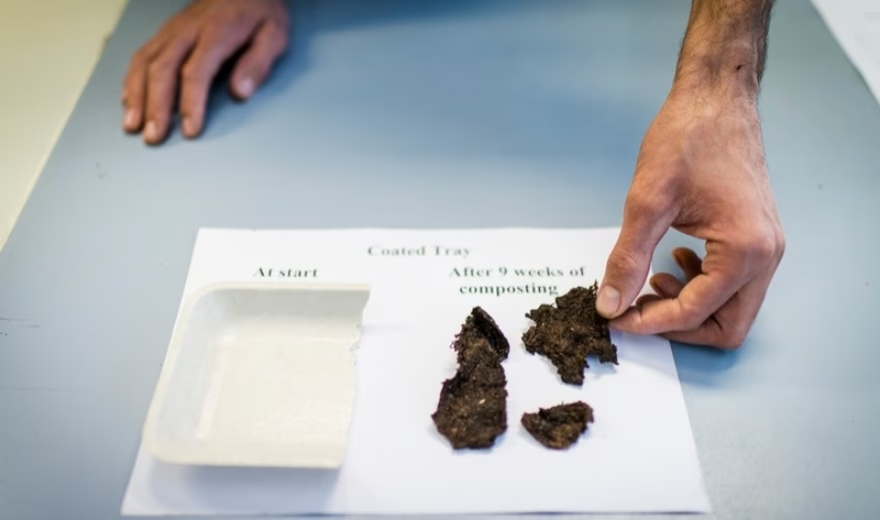
Field testing provides insight into a product’s disintegration in practice and yields a more complete picture of its compostability.

A valuable supplement to laboratory results
Field testing does not replace laboratory testing. Both methods serve different purposes within the assessment process.
Laboratory testing offers:
- High reproducibility
- Standardized conditions
- Substantiation for certification
- Confirmation of compostability
Field testing offers:
- Insight into real-world performance
- Observations under local conditions
- Additional context for test results
- Greater transparency for customers and stakeholders
Here’s what you get:
- You gain insight into how products behave outside the lab
- You can better interpret laboratory results
- You increase confidence in compostability claims
- You’ll better understand how products perform in practice
- You’ll have additional information to share with customers and stakeholders
Technical expertise and practical experience
During the study, we observe the degradation behavior of products, interpret the results in relation to laboratory data, and provide clear, technically substantiated feedback. Where relevant, we support this with additional explanations regarding product behavior and best composting practices.
Greater certainty for product development
Especially for home-compostable products, real-world conditions can have a major impact on final performance. Field testing helps to better understand how products behave after they are actually used and composted.
These insights support product development, market launches, and communication with customers, brand owners, and other stakeholders
Want to know more about field home compost testing?
Project references
You might also be interested in these services



Frequently Asked Questions about field Home compost testing
-
No. Laboratory testing remains essential for demonstrating compostability. Field testing provides additional practical insights.
-
Conditions for home composting vary greatly depending on the location and user. Field testing shows how a product behaves under these conditions.
-
Factors such as temperature, humidity, aeration, microbial activity, and local climate conditions influence the composting process.
-
No. Certification remains based on standardized laboratory testing. Field testing serves as supplementary practical validation.
-
Among others, for compostable packaging, consumer products, and other materials developed for composting.
-
In product development, market launches, explaining differences between laboratory results and real-world experiences, or supporting compostability claims.