Anaerobic degradation and biodegradation without oxygen
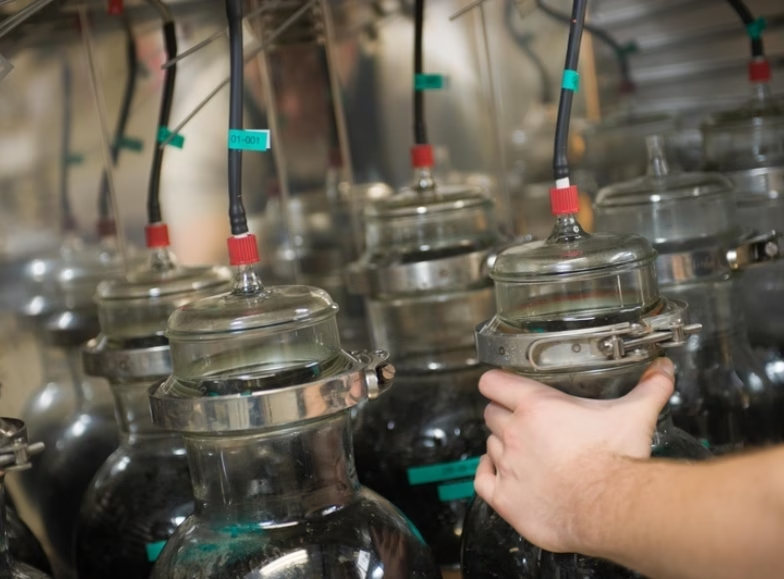
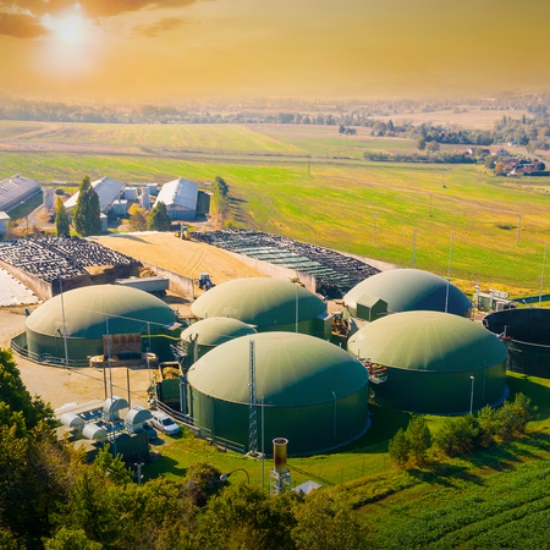
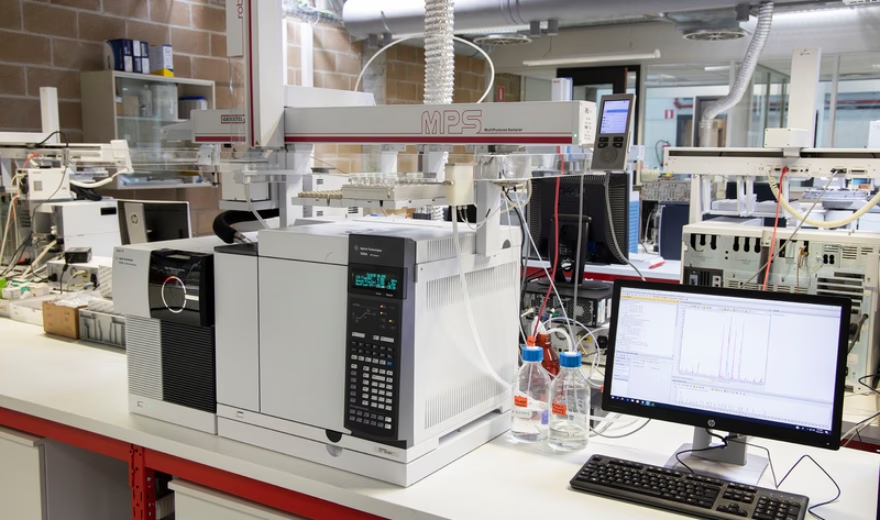
Normec conducts anaerobic degradation tests to understand the biodegradation and disintegration of materials and products in an anaerobic environment. Anaerobic degradation takes place in environments without oxygen, such as anaerobic digesters, wastewater treatment plants and landfills. Conditions and rate of degradation vary by environment.
During anaerobic biodegradation, microorganisms convert organic matter into biogas, consisting of CO₂ and methane, and into biomass. By measuring this process, the extent to which a material is biodegradable under anaerobic conditions can be determined.
Our approach
We perform anaerobic biodegradation tests according to various international standards, depending on the application and environment. For high solids anaerobic digestion (HSAD), we perform tests according to ASTM D5511. For low solids anaerobic digestion (LSAD), we use ISO 13975. For aqueous anaerobic tests, we use ISO 11734 and ISO 14853.
For HSAD testing, we offer both mesophilic and thermophilic test conditions:
- Mesophilic tests at 37°C simulate anaerobic digestion or accelerated landfill conditions
- Thermophilic tests at 55°C simulate anaerobic digesters with higher degradation rates
Our test procedures are designed to best simulate both controlled environments, such as anaerobic digesters and wastewater treatment plants, and uncontrolled environments, such as landfills.
Although no official certification yet exists for anaerobic biodegradation, testing can be performed under certification conditions for marketing or regulatory claims or under screening conditions for research and product development.
Understanding anaerobic degradation and material behavior
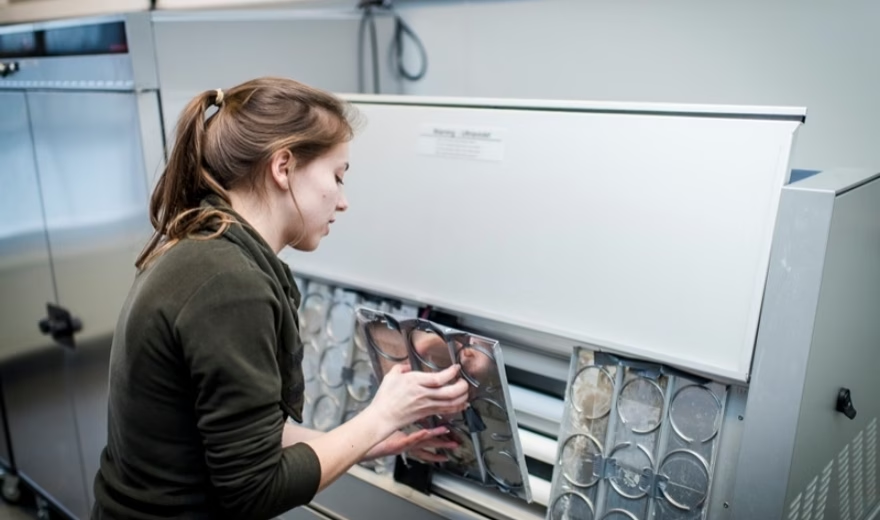
In addition to anaerobic biodegradation testing, we also perform disintegration testing to determine how materials physically disintegrate under anaerobic conditions.
What does this specifically mean for you?
-
1.
You will gain insight into biodegradation in anaerobic environments
-
2.
You can substantiate claims about anaerobic biodegradation
-
3.
You understand how materials behave in fermentation or landfills
-
4.
You support product development with test results
-
5.
You prevent environmental problems caused by poorly degradable materials
Expertise in biodegradation and environmental testing
Normec is an independent and globally recognized laboratory for biodegradation, compostability and environmental testing. We perform testing according to international standards and support companies in substantiating claims, certification processes and product development.
Our expertise includes testing for compostability, soil degradation, degradation in water and anaerobic degradation. This allows us to assess and compare materials in different end-of-life scenarios.
Prepared for the future
More and more materials are being developed for biodegradation in specific environments, such as anaerobic digestion or wastewater treatment. Regulations and sustainability goals make understanding the behavior of materials in these environments increasingly important.
By testing materials for anaerobic degradation, you gain insight into the environmental impact and end-of-life performance of your product. This is how you work towards sustainable materials and responsible end-of-life solutions.
Want to know more about anaerobic degradation?
Project references
You might also be interested in these services




Frequently Asked Questions about anaerobic degradation
-
Biodegradation is the process by which microorganisms such as bacteria and fungi break down organic material. This process can take place either aerobically or anaerobically.
In aerobic biodegradation, organic carbon, under the influence of microorganisms and in the presence of oxygen, is converted into CO₂ and water.
In anaerobic biodegradation, where no oxygen is present, organic carbon is converted to methane (CH₄) and CO₂.Biodegradation is an important component when evaluating materials in different environments, such as compost, soil, water or anaerobic digestion.
-
Compostability means that a material is broken down into organic matter by microorganisms such as bacteria and fungi. This process consists of biodegradation and disintegration. Biodegradation occurs at the biochemical level, while disintegration means that the material physically disintegrates and visually disappears in the compost.
Compostability goes beyond degradation. The material must also be safe for the environment and not adversely affect compost quality. Therefore, compostability testing consists of four major components: material properties, biodegradation, disintegration and ecotoxicity. Together, these factors determine whether a material is compostable according to applicable standards.
-
Disintegration is the physical breakdown of a product. It describes how a material fragments and breaks down into smaller pieces during composting or biodegradation, for example.
Although disintegration is often caused by microorganisms and degradation processes, disintegration by itself is not evidence of complete biodegradation. Indeed, a material can disintegrate into very small, invisible particles without being biodegraded. Therefore, disintegration is always assessed together with biodegradation and ecotoxicity in compostability and biodegradability.
-
Anaerobic degradation is the biodegradation of organic matter without oxygen, in which microorganisms produce biogas (methane and CO₂) and biomass.
-
For example, in anaerobic digesters, wastewater treatment plants and landfills.
-
ASTM D5511, ISO 13975, ISO 11734 and ISO 14853, among others.
-
No official certification currently exists, but testing can be used for marketing claims, research and product development.
-
Aerobic decomposition occurs with oxygen and produces CO₂ and water. Anaerobic decomposition occurs without oxygen and produces methane and CO₂.