Abiotic degradation tests and material fragmentation.
Unlike biodegradation, abiotic degradation is a non-microbial process. It involves the fragmentation of material into small particles under the influence of UV light and heat. This process is often the first step in the overall degradation process of materials.
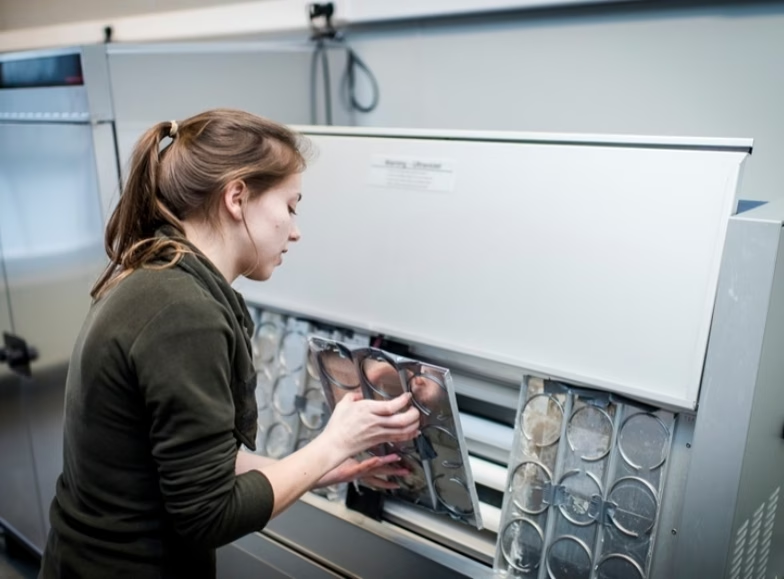
At Normec, we perform abiotic degradation tests in which natural conditions such as thermal fluctuations and sunlight are simulated as realistically as possible. Although there are no official certificates for abiotic degradation, the test results can be used for legal or marketing claims and for research and development purposes.
Our approach
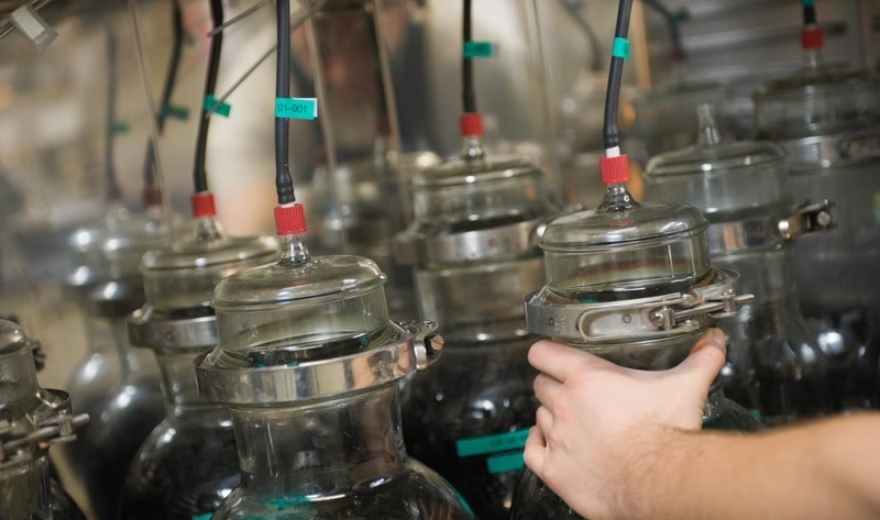
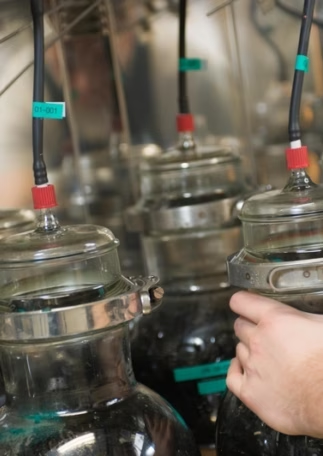
Our test facilities are set up to simulate day and night cycles and various natural conditions. These include UV weathering, thermal weathering and different temperature profiles. This gives us a realistic picture of how materials behave in practice.
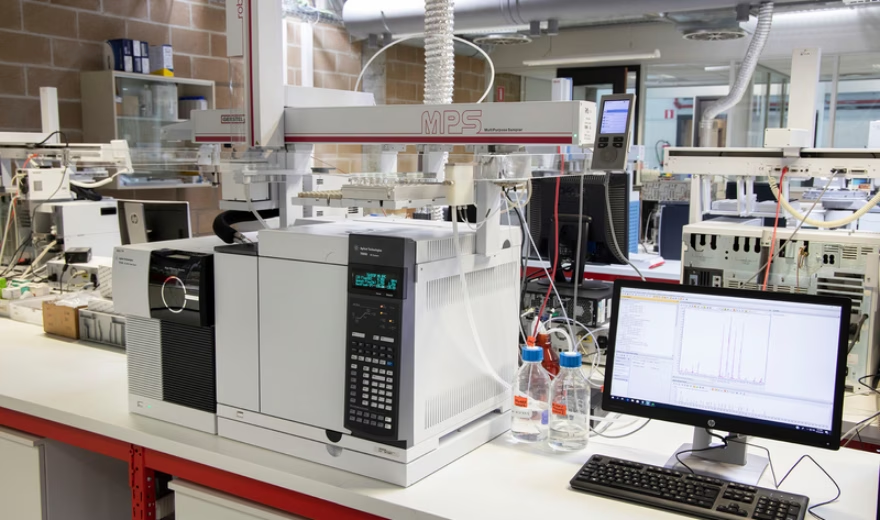
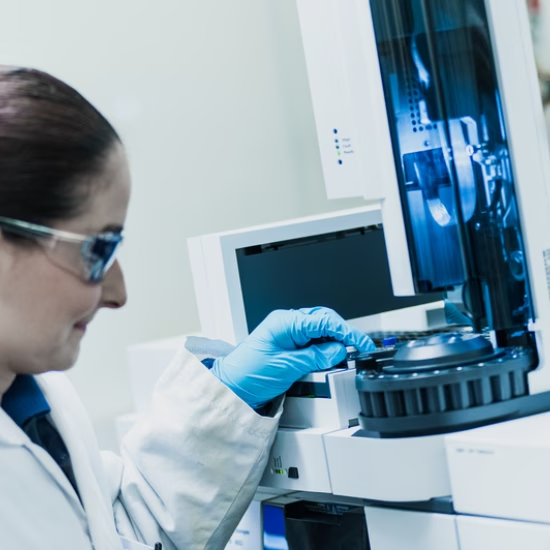
After the test period, the size of the particles can be determined by analyzing the molecular weight of the material. Based on this, insight is gained into the degree of fragmentation and degradation of the material.
Expertise in degradation studies and material testing
Normec is an independent laboratory with considerable expertise in degradation research, material testing and environmental analysis. We perform testing according to international standards such as SASO 2879 and ASTM D6954. According to these standards, abiotic degradation is the first step in the complete degradation process, followed by biodegradation.
During the second step, the fragmented material is shown to be biodegradable, for example in compost or soil, by conversion to CO₂, water and biomass. Optionally, ecotoxicity testing can be performed as a third step to fully assess environmental impacts.
Specifically, what does this mean for you?
- You gain insight into the fragmentation of materials
- You support product development and materials research
- You can use test results for claims and documentation
- You will prepare materials for further biodegradation testing
- You receive reliable test results according to international standards
Meeting future requirements
The development of sustainable and degradable materials requires an understanding of the complete degradation process. Abiotic degradation testing helps companies develop materials that degrade in a controlled manner and meet future sustainability, environmental and regulatory requirements.
Want to learn more about abiotic degradation testing?
Project references
You might also be interested in these services





Frequently Asked Questions about abiotic degradation tests
-
When a product biodegrades, carbon is converted into either CO₂/CH₄ or microbial biomass. A result of 90% biodegradation means that 90% of the carbon has been converted into CO₂/CH₄ and the rest into biomass. In practice, this means complete biodegradation.
-
Each environment has different microorganisms, temperatures and conditions. Therefore, a material may degrade rapidly in one environment and much more slowly in another. Testing in different environments gives reliable and realistic results.
-
Compostability is broader than biodegradation. A compostable product is biodegradable in compost, but material properties, disintegration and ecotoxicity are also considered.
-
We perform tests according to SASO 2879 and ASTM D6954, among others.
-
Yes, biodegradation is often tested after abiotic degradation and possibly ecotoxicity to assess the complete degradation process.