

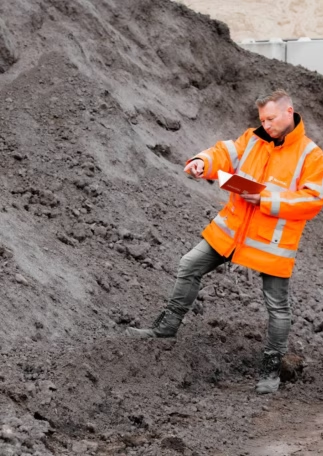
Why grain distribution is essential for material performance
Grain distribution shows how the different grain sizes in a granular material are structured. This determines properties such as stability, bearing capacity and workability. Proper distribution ensures that larger grains are filled by finer particles. This creates fewer voids and improves the cohesion of the material.
With an understanding of grain distribution, you make better informed choices for applications in road construction and foundations, for example.

How we accurately analyze grain distribution
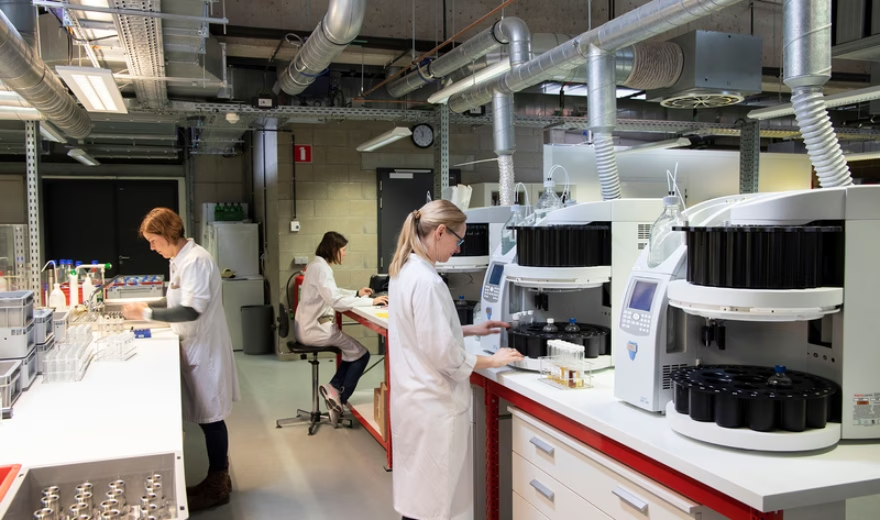
We determine grain distribution by sieving the material into different fractions. Each fraction is then weighed separately. Based on these measurements, we establish a sieve curve. This is a graphical representation of the distribution of grain sizes within the sample.
Our expertise in granular materials testing
Normec specializes in civil engineering analyses and materials testing. We combine experience with accurate measurement methods and accredited practices.
You can count on:
- Reliable and consistent analyses
- Expert interpretation of results
- Clear reports that can be used immediately
What does this mean for you?
- You gain insight into the composition of your material
- You optimize the ratio between coarse and fine fractions
- You improve stability and bearing capacity of constructions
- You prevent problems caused by incorrect material distribution
- You meet technical requirements and standards
Strong and durable applications
Good grain distribution is the basis for durable and stable constructions. With the right insights, you prevent risks and improve performance. We help you with reliable data and practical advice so that you can continue to build with confidence.
Want to know more about grain distribution?
You might also be interested in these services





Frequently Asked Questions about grain distribution
-
A grain distribution represents how different grain sizes are distributed in a material.
-
A sieve curve is a graph showing the distribution of grain sizes in a sample.
-
Because it affects properties such as stability, bearing capacity and processability of materials.
-
The grain distribution is determined according to NEN-EN 933-1.
-
The test is suitable for granular materials such as sand, gravel and mixed granules.
-
You will receive a clear report including the sieve curve and interpretation.