Maximum density as a starting point
A stable foundation or subgrade starts with proper compaction. But how do you know if a material can be compacted optimally? It starts in the laboratory.
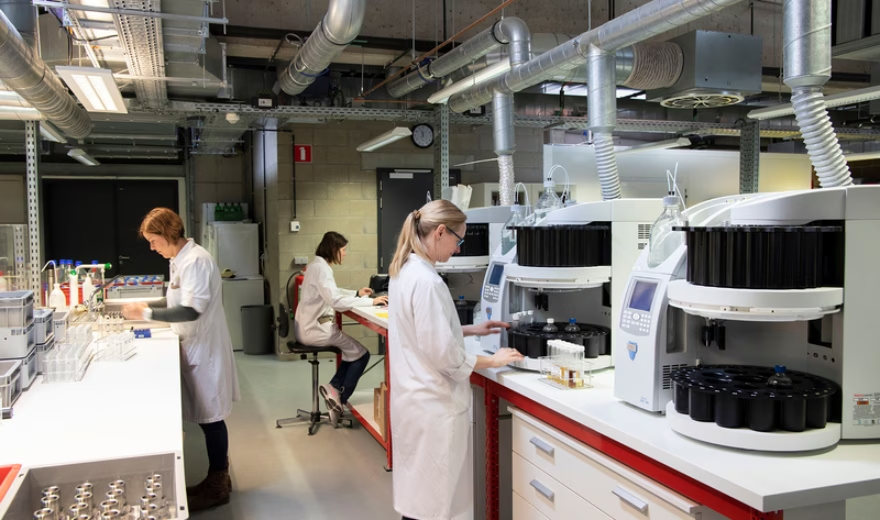
By determining the maximum density of a mixture, Normec investigates the maximum dry density a material can achieve and the moisture content required to reach it.
How does a mixture behave during compaction?
Not every material reacts the same way to compaction. Some soil types quickly reach a high density, while other materials require a specific moisture content to perform optimally.
During this test, the material is compacted under controlled conditions. Based on the results, our specialists determine:
- The maximum dry density of the mixture
- The optimal moisture content
- The compaction behavior of the material
- The reference values for site inspections
The test is often performed on:
- Soil
- Sand
- Loam
- Foundation materials
- Blended aggregates
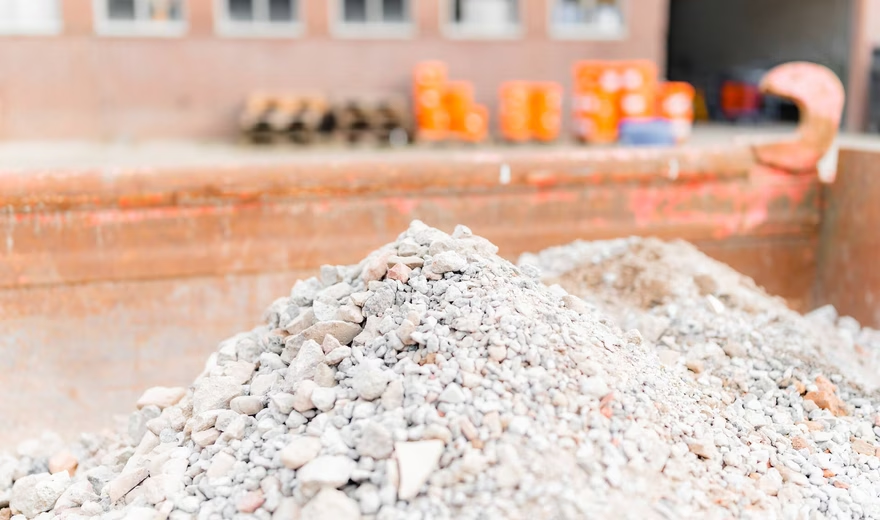
- Recycled construction materials
The benchmark for compaction testing on-site
The maximum density of a mixture is not just a laboratory value. The results are used as a reference during the execution of works.
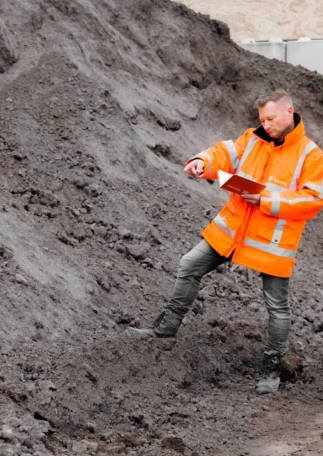
When a contractor compacts a foundation, fill, or subgrade, it can be verified whether the required degree of compaction is actually achieved. By comparing on-site measurements with the maximum density from the laboratory, an objective assessment of the quality of the work is obtained.
Benefits of this analysis:
- You have a reliable reference for on-site inspections
- You gain insight into the optimal moisture content of a material
- You can objectively assess the quality of compaction work
- You reduce the risk of settlement and stability issues
- You support technical reports with reliable measurement data

Accredited according to ISO 17025 and BELAC
Our analyses are conducted within an ISO 17025-accredited quality system and are covered by BELAC accreditation. This ensures you can rely on accurate, reproducible, and reliable results that meet the highest quality standards.
Thanks to our experience with construction materials and geotechnical investigations, we support contractors, engineering firms, manufacturers, and government agencies on a daily basis in a wide range of projects.
Prevent problems during and after construction
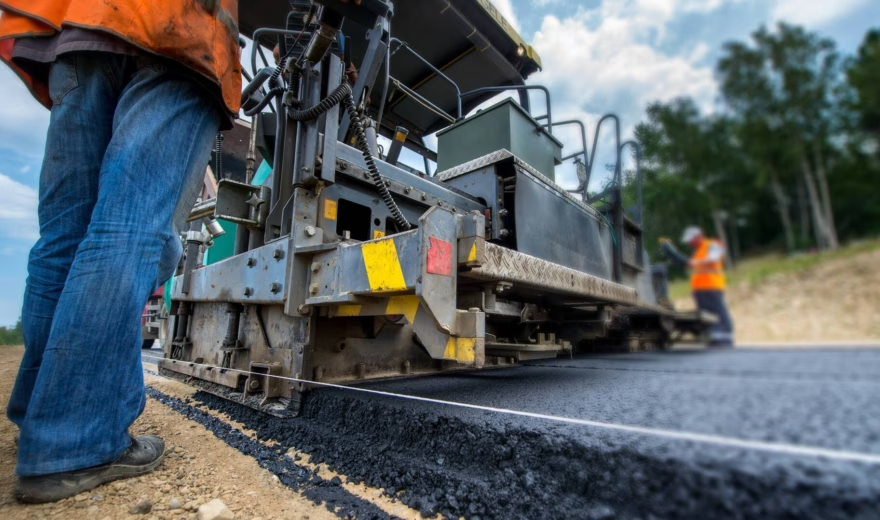
An insufficiently compacted subgrade can eventually lead to settlement, rutting, cracking, or additional maintenance costs. That is why it is important to know in advance what performance a material can actually deliver.
By determining the maximum density and optimal moisture content of a mixture, work can be better prepared and executed. This reduces the likelihood of disputes during the project and contributes to a sustainable, safe, and stable structure.
Want to know which compaction test is right for your project?
You might also be interested in these services
Frequently Asked Questions about determination of the maximum density of a mixture
-
The test determines the maximum dry density of a mixture and the moisture content at which this density is achieved.
-
Moisture content has a major impact on a material’s compactability. A material that is too dry or too wet will not compact as well.
-
These include soil, sand, loam, foundation materials, mixed aggregates, and recycled building materials.
-
The results serve as a reference for compaction checks during earthworks, foundation work, and infrastructure projects.
-
For contractors, engineering firms, government agencies, manufacturers, and other organizations involved in architectural and geotechnical projects.
-
Yes. The analysis is performed within an ISO 17025-accredited quality system and is covered by BELAC accreditation.
-
The results help assess the quality of compaction work and prevent problems such as settlement or loss of stability.