Accessibility links Skip to main content

EFSA Makes Progress in the Risk Assessment of PFAS Using Advanced Methods

The European Food Safety Authority (EFSA) has published a groundbreaking report examining the immunotoxic effects of per- and polyfluoroalkyl substances (PFAS) using New Approach Methodologies (NAMs). This research represents a significant step forward in understanding how PFAS can impair immune function—and how modern testing strategies can support decision-making by regulatory agencies.

Continue reading
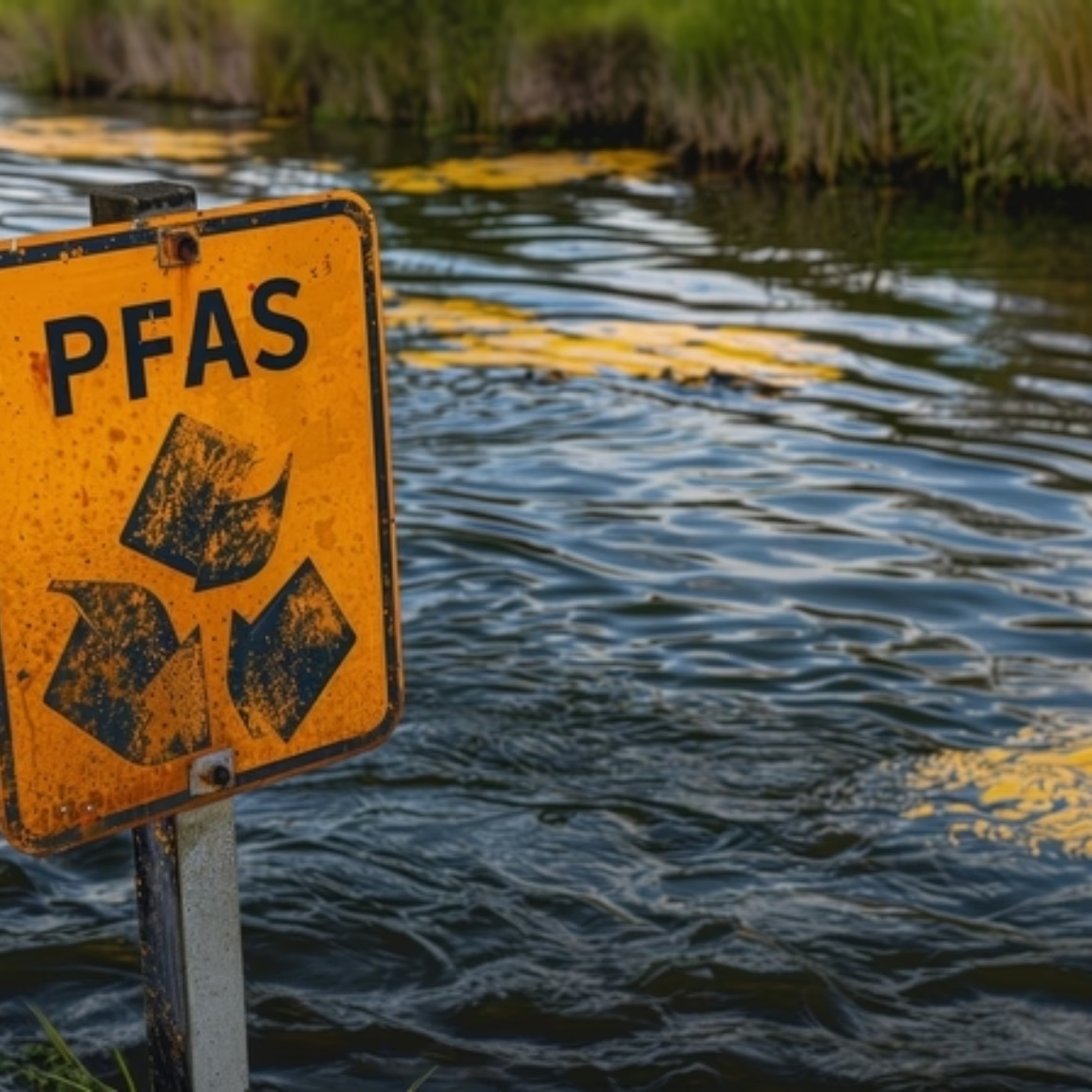
Warning sign for PFAS near a waterway with potential environmental contamination.

Why PFAS Are Important

PFAS are a group of synthetic chemicals used in a wide variety of products, from nonstick cookware to firefighting foam. PFAS are known for their persistence in the environment and the human body and have been linked to a range of health issues. One of the most pressing is their ability to suppress immune responses, including reduced vaccine efficacy and increased susceptibility to infections.

Although previous epidemiological studies had already raised alarm bells, the mechanisms behind these effects remained unclear—until now.

A New Approach to Risk Assessment

The EFSA project aimed to fill key data gaps identified in its 2020 opinion on PFAS. The team focused on four substances: PFOS, PFOA, PFNA, and PFHxS. An integrated testing strategy (ITS) was used for this purpose.

Thanks to this multifaceted approach, scientists were able to investigate not only whether PFAS are immunotoxic, but also how and why.

Key Findings

The study revealed:

  • Confirmed that all four types of PFAS tested had the potential to suppress the immune system, with PFOS and PFOA proving to be the most harmful.
  • It indicated that these immunotoxic effects observed in the laboratory would likely also occur at real-world exposure levels.
  • Predicted an increased risk due to a suppressed vaccine response, particularly among vulnerable groups.
  • These insights are crucial for regulatory agencies, researchers, and environmental laboratories involved in assessing and mitigating PFAS risks.

Read the full article here.

What This Means for Environmental Laboratories

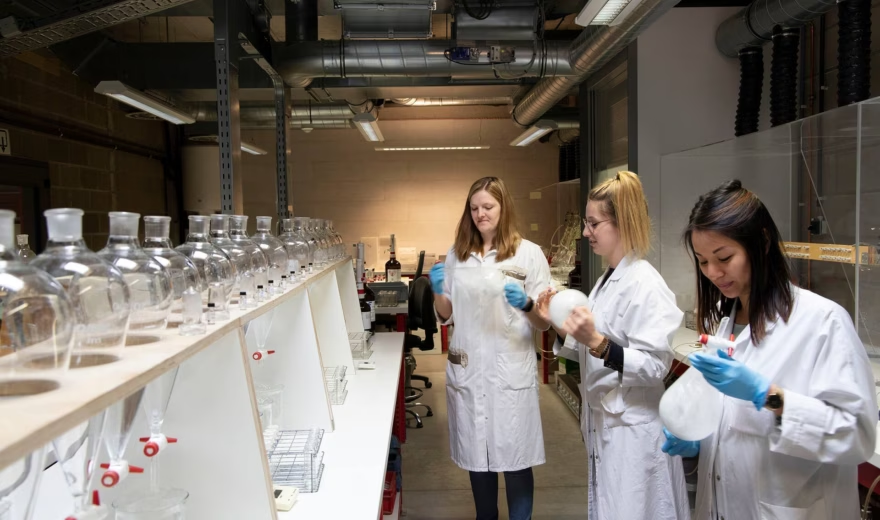
For laboratories like ours, this study is a call to action—and a source of inspiration. It demonstrates the power of combining advanced cell-based assays with computational modeling to generate meaningful, mechanistic data. As regulatory frameworks evolve, laboratories that apply NAMs will be better positioned to support compliance, innovation, and public health.

At Normec, we are already exploring how to integrate NAMs into our environmental testing services. From PFAS to microplastics, we are committed to staying at the forefront of science and sustainability.

Looking for a research and analysis partner who thinks along with you?

Whether it’s monitoring, permitting, quality control, or complex environmental issues, together we provide reliable insights you can rely on with confidence.

Request a quote

Fill out the form and we will contact you shortly.

Name
In which country would you like assistance?
Privacy Policy 

Contact us

Fill out the form and we will contact you shortly.

Name
In which country would you like assistance?
Privacy Policy 

Related news articles

A drainpipe discharges contaminated water into a stream or river along a natural bank.
19 Jun 2024

New Wastewater Legislation

On January 1, 2024, the long-awaited Environmental Act took effect, introducing several significant changes to the regulations governing wastewater discharges. Previously, all regulations regarding discharges were set centrally by the state, but with the Environmental Act, we are seeing a shift toward decentralization. What does this law entail, and what are the implications for companies that discharge wastewater?

Colleagues are meeting at a desk with a laptop and tablet in a modern office setting.
03 Feb 2026

Normec OWS Launches Intelligence Platform to Support Sustainable Innovation

Normec OWS is proud to announce the launch of its new Intelligence Platform, a dedicated knowledge center designed to help professionals navigate the rapidly changing regulatory landscape surrounding biodegradability, compostability, and sustainability.

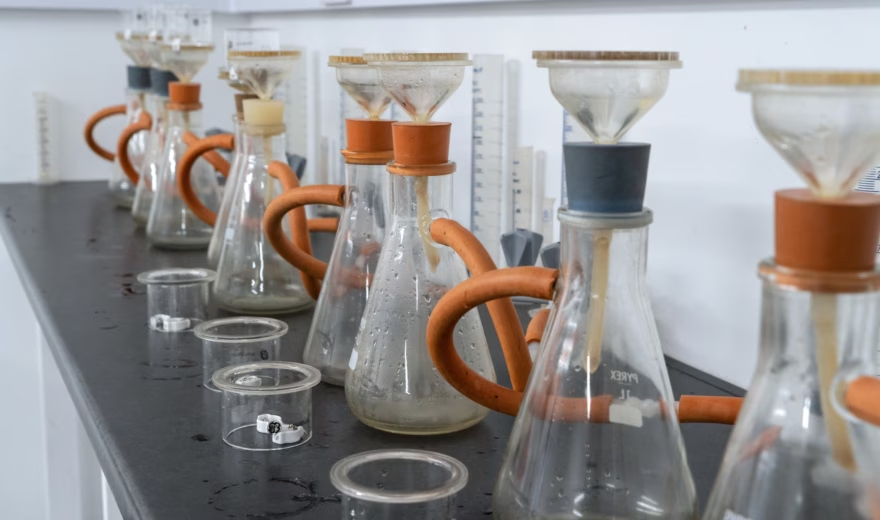
Laboratory glassware with filter systems set up for microbiological or chemical analyses.
09 Jun 2026

PFAS in the Spotlight: Join Our Next Webinar

Based on the feedback from our recent survey, we are pleased to announce the topic of our next webinar: PFAS (per- and polyfluoroalkyl substances). 70% of respondents chose PFAS as the topic they most wanted to learn more about, underscoring the growing concern about these persistent environmental pollutants.

Carla Maccioni in a meadow
10 Jul 2025

Team Member in the Spotlight: Carla Maccioni

This month, we are proud to introduce Carla Maccioni, the expert behind our laboratory development in the field of PFAS (per- and polyfluoroalkyl substances). With a strong background in analytical chemistry and a passion for environmental protection, Carla plays a key role in expanding our PFAS testing capabilities.

Sign up for our newsletter

Sign up

Fill in the form and you’ll receive our newsletter shortly.

Naam
Privacy Policy 

Related services

Visualization of molecular structures related to PFAS analysis and chemical research.

PFAS testing on products

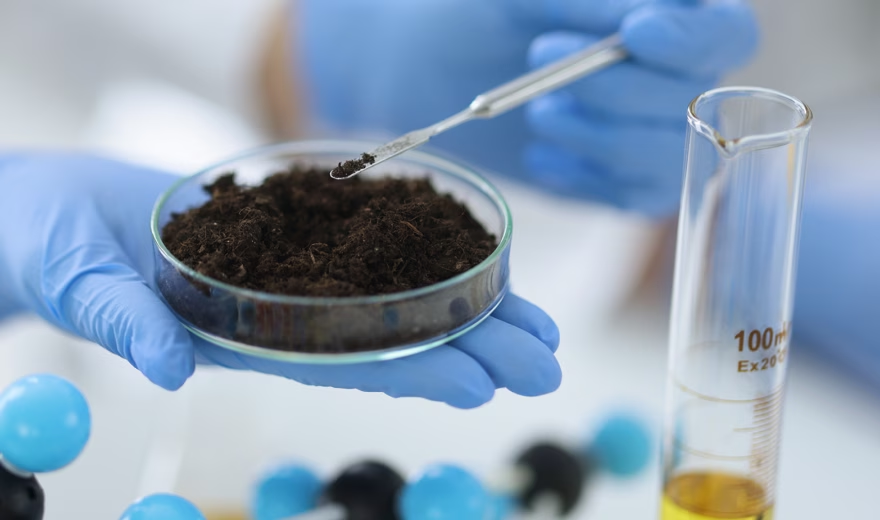
PFAS Analysis of Soil and Subsoil

PFAS and ultra-short-chain PFAS

Reagenzgläser in einer Maschine

Inorganic compounds