Why is sediment sampling important?
Before dredging operations are carried out, it is important to gain insight into the quality of the sediment present. The results often determine how the material released may be processed, reused, or disposed of.
Governments, water authorities, and engineering firms are therefore required to have the quality of sludge and sediment tested prior to dredging operations. Representative sampling forms the basis for reliable analyses and sound decision-making.
Inadequate or incorrect sampling can lead to incorrect classifications of the material, project delays, and additional costs in the processing of dredged material.
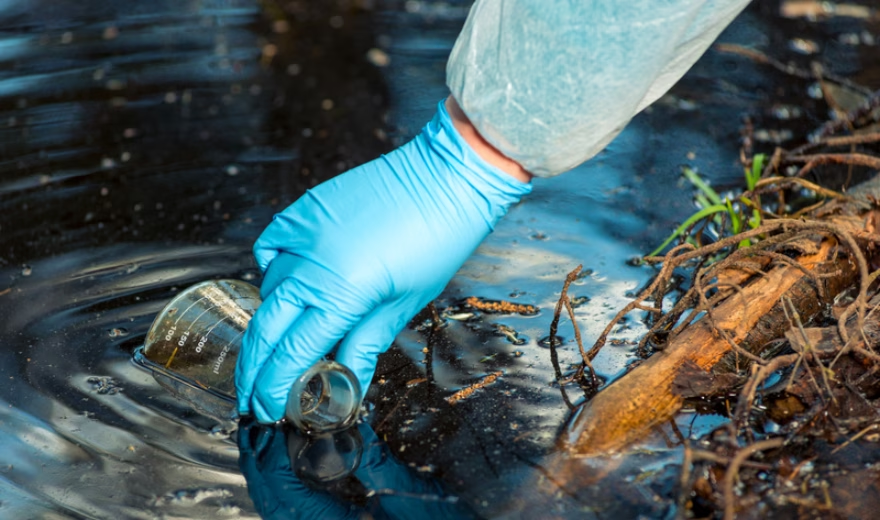
Normec conducts sediment sampling in accordance with applicable CMA procedures and guidelines from the Flemish government. Depending on the location, water depth, and research objective, we employ various sampling techniques.
Van Veen grab, suction corer, and multisampler
-
1.
Van Veen grab
The Van Veen grab is used to sample the top sediment layer. This instrument works similarly to a grab and typically collects the top layer of the sediment.
-
2.
Suction core sampler
A corer can be used to investigate deeper sediment layers. The corer is pressed into the sediment so that a representative profile of the entire sediment layer can be collected.
-
3.
Multisampler
The multisampler operates on the same principle as a piston corer, but is more compact and suitable for specific sampling applications.
Depending on the situation, we carry out the work:
- From the shore
- From a boat
- On waterways with limited depth
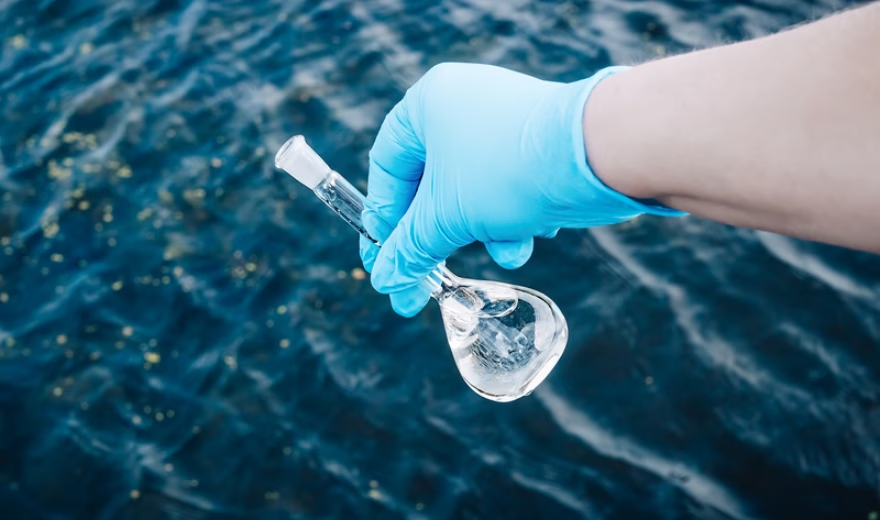
- On ponds, canals, waterways, and rivers
For hard-to-reach locations, Normec has an aluminum flat-bottomed boat with an outboard motor, specially designed for shallow waterways.

For dredging and water management projects
Proper sediment sampling provides the data needed to determine the quality of sludge and dredged material. Based on these results, it can be determined which processing, disposal, or application is feasible.
Here’s what this means for your organization:
- You meet legal research obligations
- You gain insight into the quality of sediment and dredged material
- You prevent delays during dredging operations
- You support processing and disposal decisions
- You have reliable data for permits and reports
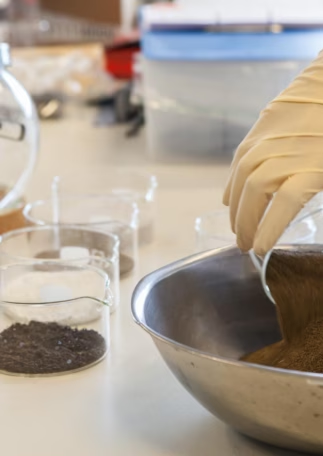
After sampling, the samples are analyzed in Normec’s accredited laboratory, ensuring that the entire process is carried out under one roof.
Recognized specialist in sediment research
Our specialists have the right equipment, vessels, and expertise to conduct sediment sampling in a wide range of conditions. Thanks to our combination of fieldwork and laboratory research, we can efficiently and comprehensively support projects.
Clients choose Normec because of:
- Accreditation by the Flemish government
- Sampling in accordance with CMA procedures
- Experienced field staff and specialists
- Specialized equipment for waterbed research
- Complete end-to-end service from sampling to reporting
Prepared for future requirements
Governments and water managers are setting higher standards for the quality of survey data and the responsible disposal of dredged material. With professional sediment sampling, you have the information needed to meet these requirements.
In addition, you contribute to responsible water management, environmental protection, and the efficient execution of future dredging projects. This ensures you are prepared for today’s challenges and tomorrow’s regulations.
Do you want to know more about sediment sampling?
Project references
You might also be interested in these services
Frequently asked questions about sediment sampling
-
Sediment sampling is often performed prior to dredging operations, waterbed surveys, and projects involving the removal or processing of sludge or dredged material.
-
A Van Veen grab is a sampling tool that collects the top layer of sediment. This method is widely used for research on surface or top-layer sediment.
-
A Van Veen grab primarily samples the top sediment layer. A suction sampler allows for the investigation of deeper sediment layers and complete sediment profiles.
-
Yes. Normec has a specially equipped flat-bottomed boat that allows for safe sampling even in shallow waterways.
-
We conduct sampling in canals, ponds, waterways, rivers, streams, and other bodies of water.
-
The samples are sent to the laboratory for analysis of relevant environmental and chemical parameters.
-
Yes. Normec handles both the sampling and the laboratory analysis and reporting, so you have a single point of contact for the entire testing process.