Why aggregates testing is essential
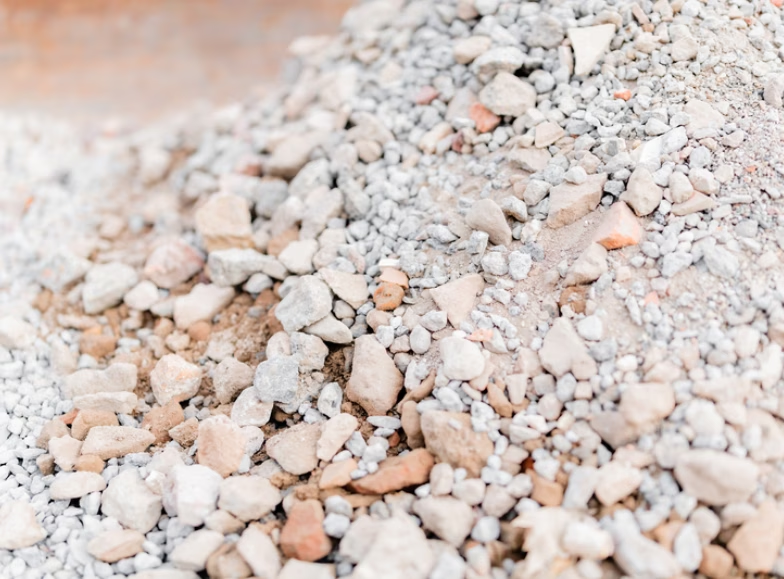
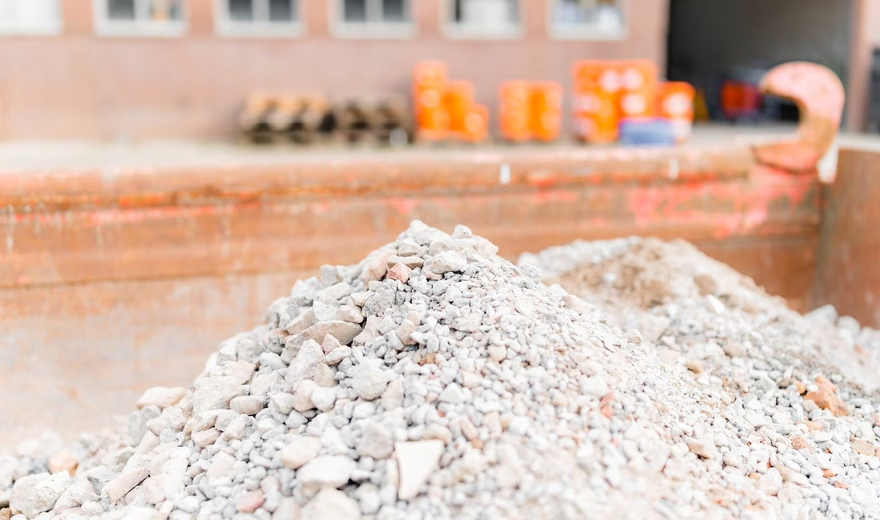
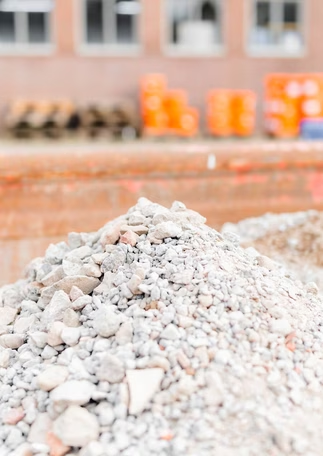
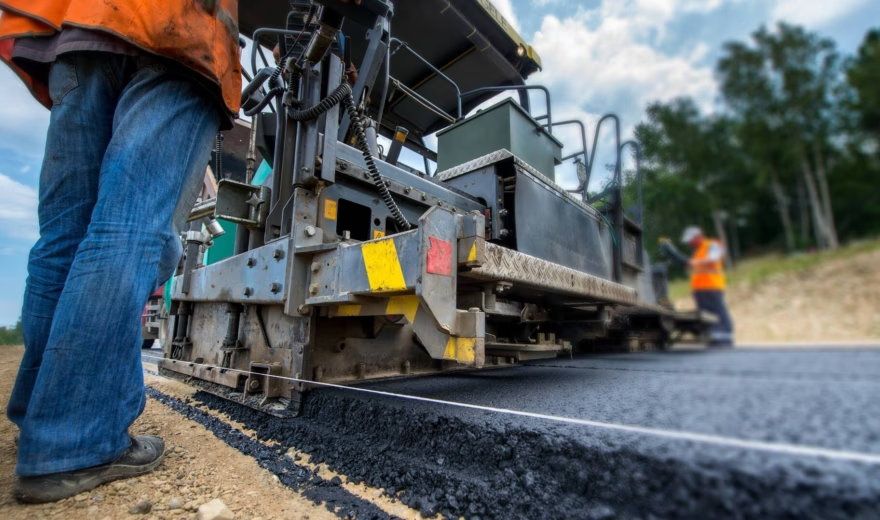
Aggregates such as concrete rubble, asphalt rubble and mixed aggregates are widely used in construction and infrastructure. The quality and composition of these materials determine their performance and applicability.
With focused aggregates research, you gain insight into the properties of the material and meet requirements for CE marking, certification and other applications.
How we analyze aggregates
Normec carries out both environmental and constructional studies on aggregates entirely in-house and without the intervention of subcontractors. This ensures short lead times and reliable results.
We also support you practically in the process. You receive suitable debris bags with double liners. As soon as these are filled, our own couriers will collect the samples from you free of charge, anywhere in Flanders.
Complete and specialized research
Within our Building Rubble Department, we examine various types of materials such as concrete rubble, asphalt rubble, masonry rubble, mixed rubble and various sorting and crushing sands on a daily basis. These analyses are carried out for applications such as CE inspection, certification (COPRO, Certipro) and other specific applications.
Our range of services includes:
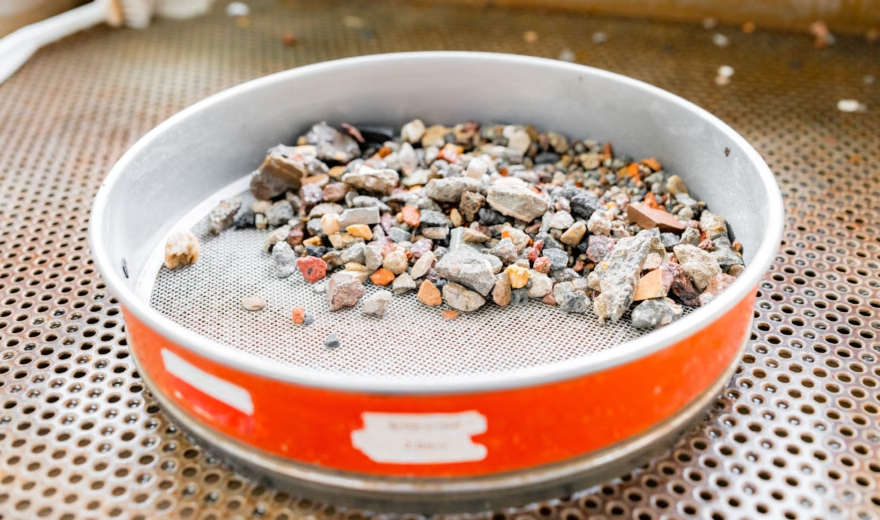
- Sieve analysis (EN 933-1)
- Particles < 63 µm (EN 933-1)
- Classification test of coarse recycled aggregates (PTV 406 8.0 Appendix I)
- Classification test fine recycled granules (PTV 406 8.0 Appendix J)
- Floating and non-floating contaminants and glass in aggregates (CMA/2/II/A.22)
- Floating and non-floating contaminants and glass in sorting and crusher sands (CMA/2/II/A.23)
- Methylene blue value (EN 933-9)
- Percentage of broken surfaces (EN 933-5)
- Flatness index (EN 933-9)
- Los Angeles test (resistance to crushing) (EN 1097-2)
- Micro-Deval (resistance to abrasion) (EN 1097-1)
- Density fraction 4 - 31.5 mm (EN 1097-6)
- Humus content (EN 1744-1 § 15.1 and § 15.2)
- Calcareous constituents (NBN 589-209)
- Organic substances (NBN 589-207)
- Yield strength and plasticity (NBN ISO TS17892-12)
What does aggregates testing give you?
Our analyses give you insight and certainty about your materials.
This means for you:
-
1.
You meet requirements for CE marking and certification.
-
2.
You know whether aggregates are suitable for application
-
3.
You prevent rejects and delays in projects
-
4.
You substantiate choices with reliable test results
-
5.
You optimize quality and reuse of materials
Future-oriented work with recycled materials
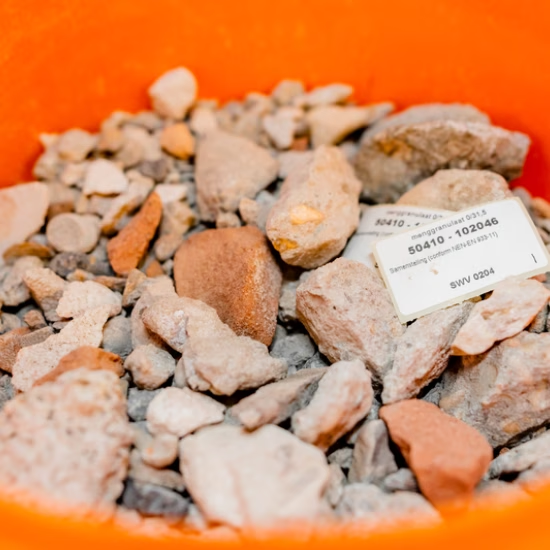
The use of recycled aggregates is growing rapidly. By thoroughly testing these materials, you ensure safe and sustainable applications. In this way, you not only work according to the rules, but also contribute to a circular and future-proof construction sector.
Want to know more about aggregates research?
Project references
You might also be interested in these services

Frequently asked questions about aggregates
-
These are materials such as sand, gravel or crushed rubble used in construction.
-
To determine if the material meets quality requirements and is suitable for application.
-
A certification that shows that a product meets European standards.
-
Among others, concrete rubble, asphalt rubble, masonry rubble and mixed aggregates.
-
Yes, we provide debris bags and collect samples from you.
-
Yes, we test according to recognized European and national standards.