


Understanding exposure to diesel engine emissions
Workers in sectors such as construction, infrastructure, mining, the rail sector and other confined working environments may be exposed to diesel engine emissions. These emissions consist of a complex mix of gases and fine particles that can be harmful to health.
Reliable laboratory analysis is essential for accurately assessing exposure. Normec supports organisations with precise analyses that provide insight into the presence of key indicators of diesel engine emissions. This gives you the information you need to better assess exposure in the workplace.
EC and OC analyses in our own laboratory
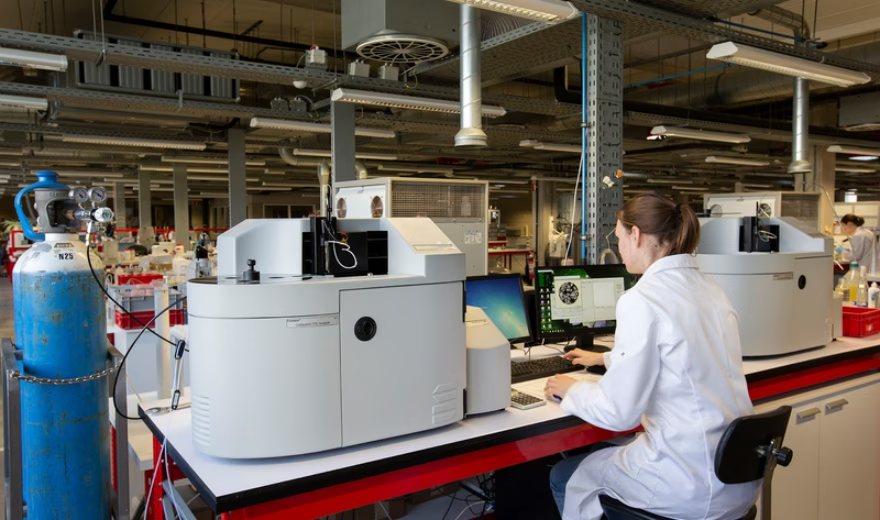
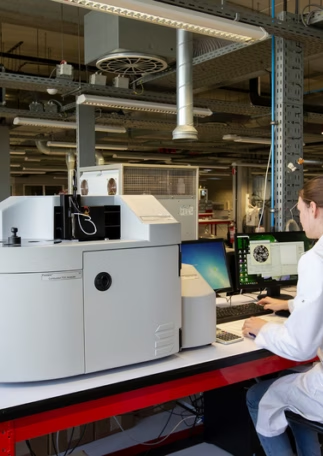
Our laboratory specialists use validated analytical methods and strict quality procedures to deliver reliable and reproducible results.
Elemental Carbon (EC) is internationally recognised as a key indicator of exposure to diesel particulates. As EC is primarily released during combustion processes and remains stable in the environment, it is a reliable parameter for assessing diesel engine emissions.
Depending on the research question, we can also carry out analyses of Organic Carbon (OC). The combination of EC and OC analyses provides valuable information for exposure studies.
Upon receipt of the samples supplied, our specialists carry out the required analyses. The results are checked and reported, ensuring you have access to reliable measurement data quickly.

Underpin decisions with reliable analysis results
Exposure to diesel engine emissions can pose health risks, particularly when workers are exposed to fine diesel particles over long periods. By analysing the concentrations of Elemental Carbon (EC) and Organic Carbon (OC), you gain insight into the level of exposure within your working environment.
The analysis results help you assess exposure levels and form a valuable basis for an effective occupational health and safety policy.
What this means for you in practical terms:
- You gain reliable insight into exposure to diesel engine emissions
- You will receive accurate EC and OC analysis results
- You will have clear reports for exposure assessments
- You benefit from fast turnaround times and consistent laboratory quality
- You’ll be helping to ensure a safe and healthy working environment
A healthier working environment
A reliable assessment of diesel engine emissions starts with accurate laboratory analyses. By gaining insight into exposure to diesel particulates, you can make informed decisions to better manage risks in the workplace.
Normec supports organisations with reliable EC and OC analyses that contribute to a safe, healthy and future-proof working environment. Ready for the future.
Would you like to understand exposure to diesel engine emissions?
You might also be interested in these services




Frequently asked questions about analysis of diesel engine emissions (DEEE)
-
Diesel Engine Exhaust Emissions (DEEE) are emissions released during the combustion of diesel fuel. They consist of a complex mix of gases and fine particles which, with prolonged exposure, can be harmful to health.
-
Elemental Carbon (EC) is internationally recognised as a key indicator of exposure to diesel particulates. The analysis provides a reliable picture of the presence of diesel engine emissions in the workplace.
-
Depending on the research question, an analysis of Organic Carbon (OC) can provide additional information about the composition of diesel engine emissions. The combination of EC and OC analyses provides a more complete picture of exposure.
-
Occupational hygiene focuses on identifying, assessing and controlling health risks in the workplace. By analysing exposure to harmful substances, such as diesel engine emissions, organisations gain insight into potential risks and can take appropriate measures.
-
No. Normec carries out laboratory analyses of samples supplied to us only and does not provide on-site sampling or consultancy services.
-
Because we use efficient laboratory processes and validated analytical methods, we can deliver reliable results within short turnaround times.