Understanding asbestos in the soil
A standard asbestos analysis shows whether and how much asbestos is present in a soil sample. However, this does not always provide a complete picture of the risk at a site. The form in which asbestos occurs and the quantity of fibres that can actually be released are key factors in determining the health risk.
With Dustiness Testing, Normec investigates how many respirable asbestos fibres can be released from the soil under realistic conditions. This gives you a better understanding of the actual risks and provides you with the information needed to implement control measures.
How does Dustiness Testing work?
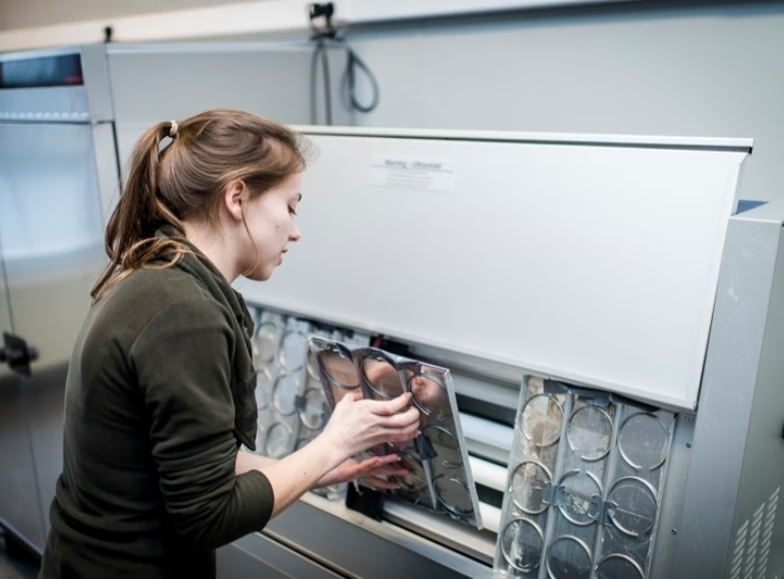
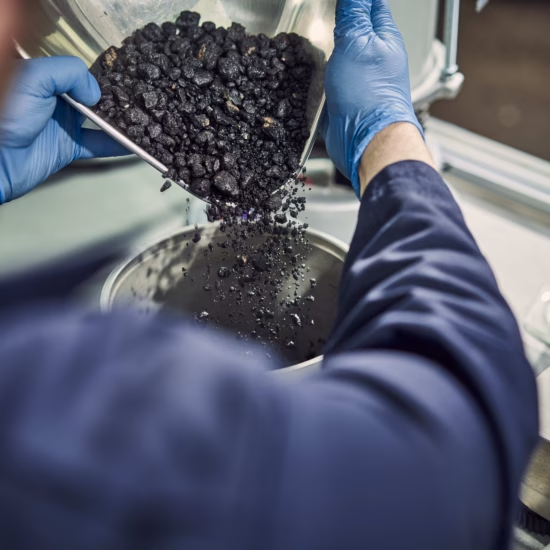
During Dustiness Testing, a representative soil sample or other test material is rotated in a sealed metal drum for a fixed period. At the same time, a controlled airflow is passed through the system to simulate on-site conditions as closely as possible.
The dust particles released are captured by filters. Our specialists then analyse the respirable asbestos fibres: the fibres that can penetrate deep into the lungs and therefore pose the greatest health risk.
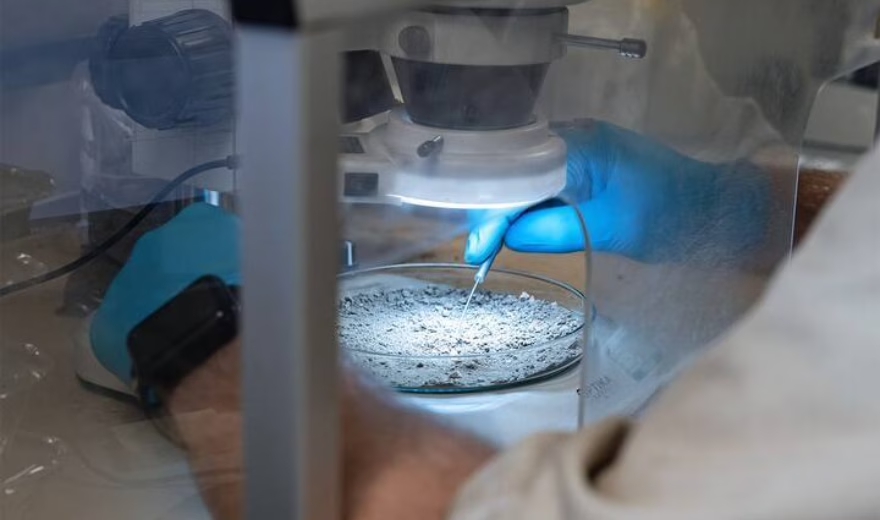
Fibre counting is carried out using Phase Contrast Optical Microscopy (PCOM) in accordance with HSG248. Based on the measured fibre concentration and the amount of dust released, we determine a normalised concentration of respirable asbestos fibres. This provides a more reliable picture of the risks on site.
A more comprehensive picture of the risks
Dustiness Testing is a valuable addition to the identification and quantification of asbestos in the soil. By combining these analyses, you gain insight not only into the presence of asbestos, but also into the extent to which asbestos fibres can actually be released.
Furthermore, the analysis method can be adapted to the specific circumstances of your project. For example, we can carry out tests at different moisture levels or investigate the effect of binding agents on the emission of dust and fibres.
What this means for you in practical terms:
- You gain insight into the quantity of respirable asbestos fibres that may be released
- You can substantiate risk assessments with additional laboratory data
- You can easily combine the results with identification and quantification tests
- You can tailor the analysis method to the circumstances of your project
- You’ll benefit from fast turnaround times and competitive rates
Expertise in Dustiness Testing
Normec has extensive experience in laboratory testing for asbestos in soil. Our Dustiness Testing is ISO 17025 accredited and is carried out in accordance with internationally recognised analytical methods.
With modern laboratory facilities, experienced specialists and advanced analytical techniques, we deliver reliable results that contribute to a well-founded risk assessment.
Depending on laboratory capacity, standard turnaround times of five working days are possible, with an expedited analysis within three working days available on request.
Ready for the future
A proper risk assessment requires more than just an understanding of the amount of asbestos in the soil. By also investigating how many respirable fibres could actually be released, you gain a more complete picture of the risks on site.
Normec supports you with reliable laboratory analyses that help you assess sites, determine control measures and make well-informed decisions for the further implementation of your project. Ready for the future.
Looking for an experienced partner for Dustiness Testing?
You might also be interested in these services





Frequently asked questions about dustiness testing for asbestos
-
Dustiness Testing is a laboratory analysis that examines how many respirable asbestos fibres can be released from a soil sample under controlled conditions.
-
A standard analysis shows how much asbestos is present. Dustiness Testing also provides insight into the quantity of fibres that can actually be released into the air and therefore pose a health risk.
-
The method is mainly applied to soil samples, but can also be carried out on other materials where this is required for a project.
-
Yes. The test conditions can be adjusted, for example by testing at a specific moisture content or with added binders to assess the suppression of dust and fibre formation.
-
The released respirable fibres are counted using Phase Contrast Optical Microscopy (PCOM) in accordance with HSG248.
-
Normec has a standard turnaround time of five working days. Depending on laboratory capacity, an expedited analysis within three working days is possible.